Proudly serving Phoenix, Glendale, Mesa, Scottsdale, Tempe, Chandler & surrounding areasCall or Text 24/7: 480-264-8023
Aerial view of residential neighborhoods, desert ridgelines, and arterial roads in Phoenix, AZ at sunrise.

Auto Glass Repair in Phoenix, AZ for Laminated and Tempered Glass

Phoenix Windshield Replacement Co. provides auto glass repair in Phoenix, AZ, for damaged windshields and vehicle windows. Our services include windshield repair and replacement, mobile windshield replacement, side and rear glass replacement, ADAS calibration, and window regulator repair. We work with laminated windshield glass and tempered side and rear glass to address the specific pane and damage involved. Drivers can call for a phone estimate before choosing repair, replacement, or an insurance claim.

Loose gravel on Loop 101, I-17, and Loop 202 can leave chips that spread as Phoenix glass heats and cools. Surface temperatures can swing more than 100 degrees between an early commute and an afternoon parking lot, while summer temperatures regularly exceed 110 degrees. We assess the break pattern, depth, location, and vehicle features before recommending a repair or replacement. That approach protects visibility and helps avoid replacing factory glass when a qualifying chip or short crack can still be repaired.

Qualifying rock chip repairs include a lifetime chip repair guarantee, and comprehensive glass claims can often be processed directly with Arizona insurance carriers.

Phoenix Windshield Replacement Co. provides auto glass repair across Phoenix and the surrounding metro, including Scottsdale, Tempe, Mesa, Glendale, and Chandler.

★ ★ ★ ★ ★4.9/5 Average Rating · 20+ Years of Experience · Thousands of Customers Helped · Licensed & Insured · Residential & Commercial

Auto Glass Repair Options & Benefits

What Is Auto Glass Repair?

Auto glass repair stabilizes a chip or short crack by cleaning the break, injecting clear resin under pressure, curing it with UV light, and polishing the surface. The goal is to bond the laminated windshield layers and stop the damage from spreading under road vibration and heat stress.

A chip smaller than a quarter or a crack under six inches can usually be repaired when it stays away from the windshield edge and the driver's direct line of sight. Bullseye chips, star breaks, and combination breaks require an assessment of pattern, depth, and location before repairability can be confirmed.

When the damage is too extensive, replacement restores the windshield's bonded structural role with laminated safety glass, fresh urethane, and the required cure time. Vehicles with windshield-mounted cameras may also need static or dynamic ADAS recalibration after the new glass is set.

Benefits of Timely Auto Glass Service

Prompt assessment keeps a small impact from becoming a longer crack and matches the solution to the glass type, vehicle equipment, and safety concern. Repair can preserve factory windshield glass, while replacement addresses damage that compromises visibility or windshield retention.

  • Resin repair can stop qualifying chips and short cracks from spreading.
  • Mobile service brings shop-grade materials to a home, office, or parking location.
  • OEM and quality aftermarket glass provide options for vehicle fit and budget.
  • Matched tint, thickness, seals, and sensor brackets support a proper installation.
  • ADAS recalibration restores camera alignment after applicable windshield replacements.
  • Direct insurance coordination can reduce claim paperwork and scheduling delays.
  • Defrost lines, antenna elements, and affected rear cameras are checked after rear glass work.
  • Window regulator diagnostics can separate a motor fault from a cable, gear, track, or switch problem.
Repair & Replacement

Complete Auto Glass Services

Service covers repairable chips, complete windshield swaps, tempered door and rear glass, mobile appointments, camera calibration, and power-window mechanisms. Each recommendation starts with the affected pane, the shape and location of the damage, and the equipment built into the vehicle.

Windshield Chip and Crack Repair

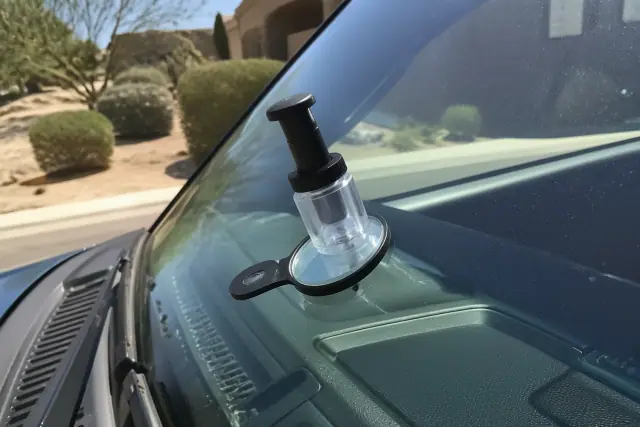
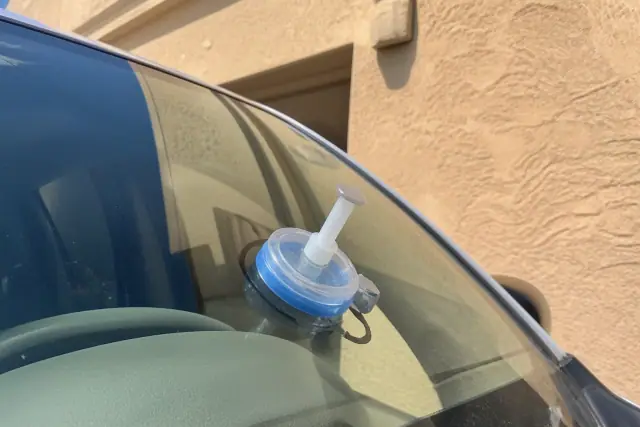
Resin injector tool repairing a star break on a vehicle windshield in Phoenix, AZ.

Clear resin is injected into repairable rock chips and short cracks, then cured under UV light and polished. A typical repair takes 20 to 30 minutes per chip, and qualifying rock chip work is backed by the lifetime chip repair guarantee.

Request Estimate

Front Windshield Replacement

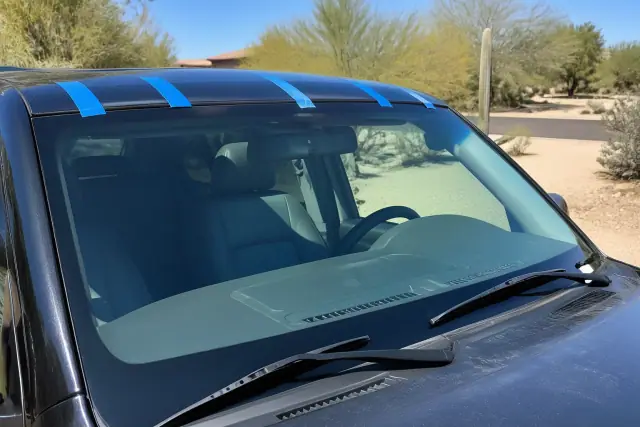
New windshield with retention tape installed on a vehicle at a job site in Phoenix, AZ.

Replacement removes damaged glass and old adhesive to the proper bed height, prepares the pinch weld, renews seals as needed, and sets laminated safety glass with fresh urethane. Labor typically takes 45 minutes to an hour, followed by a minimum one-hour urethane cure before the vehicle is safe to drive.

Request Estimate

Mobile Windshield Replacement

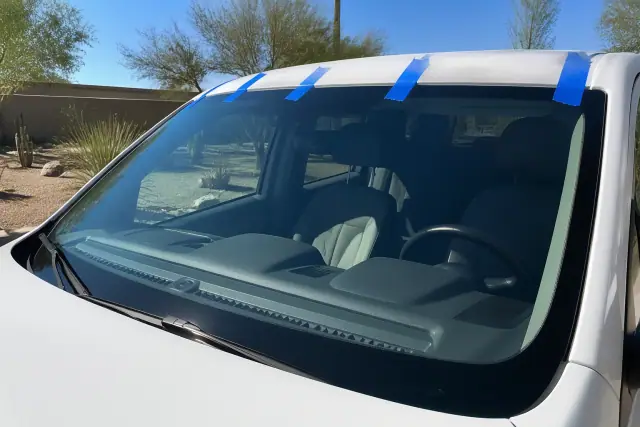
Newly installed car windshield with retention tape on a vehicle in Phoenix, AZ, surrounded by desert landscaping.

Mobile technicians bring the same equipment and materials used in the shop to homes, offices in downtown Phoenix, and suitable parking locations near Sky Harbor. Most standard replacements can be scheduled and completed the same day when the correct glass is in stock for the vehicle's make and model.

Request Estimate

Side, Quarter, and Vent Window Replacement

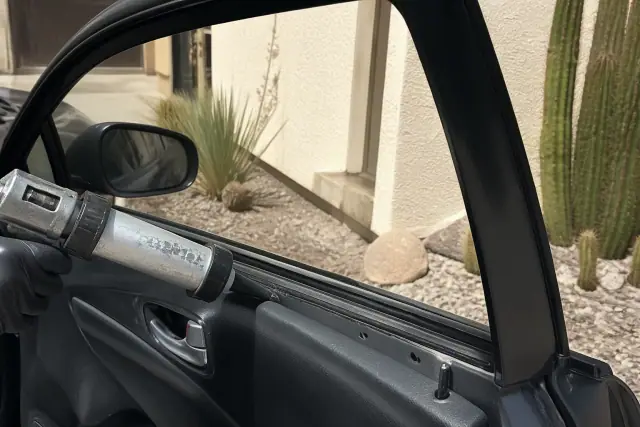
Technician applying adhesive to a car window channel during an auto glass repair in Phoenix, AZ.

Door glass, quarter windows, and vent windows generally use tempered glass designed to break into small pieces instead of large shards. Replacement matches the original tint and thickness and removes broken glass from the affected opening and door area.

Request Estimate

Rear Glass Replacement

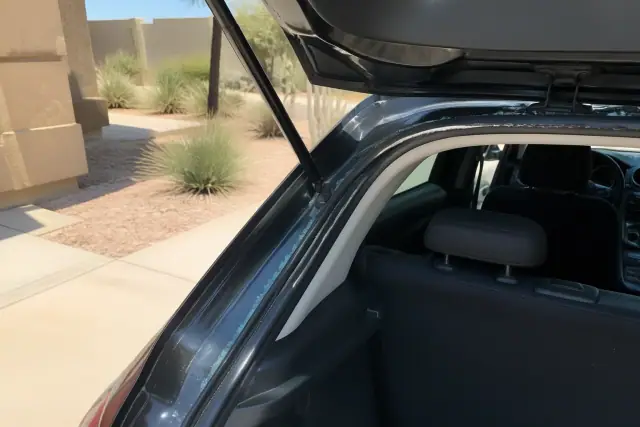
Broken glass fragments being removed from the hatchback trunk weather stripping during an auto repair in Phoenix, AZ.

Back glass replacement accounts for embedded defrost lines and antenna elements that may be connected to the pane. Those connections are tested after installation, and any rear camera system affected by removal is recalibrated as required.

Request Estimate

Window Regulator and Motor Repair

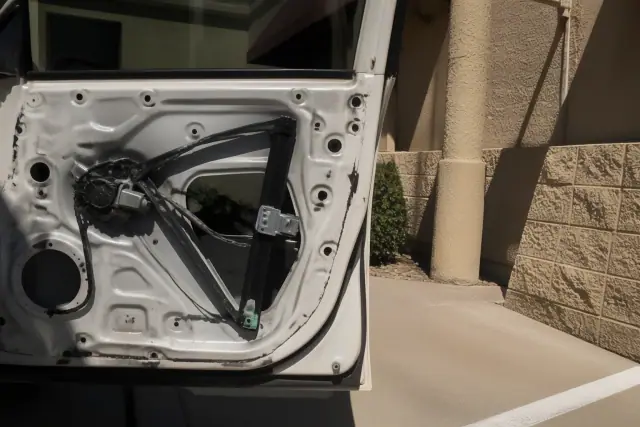
An exposed vehicle door interior with the window regulator and motor visible during repair work in Phoenix, AZ.

Power-window service tests the switch, wiring harness, motor draw, cable, gears, and track before parts are recommended. A five-minute diagnostic can show whether the fault calls for a regulator assembly, a separate motor, or track cleaning and lubrication.

Request Estimate
Glass & Service Options

Auto Glass Replacement Options

The right option depends on whether the existing glass can be saved, which pane is damaged, and whether the vehicle has cameras, rain sensors, a heated wiper park, an acoustic interlayer, or other built-in features. OEM and aftermarket choices are reviewed against fit, safety glazing requirements, sensor placement, and budget.

Resin injector tool repairing a windshield rock chip on a vehicle in Phoenix, AZ.

Rock Chip and Short Crack Repair

Repair is considered when the break is small, stable, and positioned where cured resin will not distort the driver's view. Catching the damage before heat cycling extends it toward an edge gives the existing windshield its best chance of being saved.

  • Best suited to chips under an inch and away from the edge.
  • Bullseye, star, and combination breaks are assessed individually.
  • Clear resin fills the break under pressure.
  • UV curing hardens the repair before polishing.
  • Direct-sightline damage is not repaired when distortion would remain.
Request Estimate
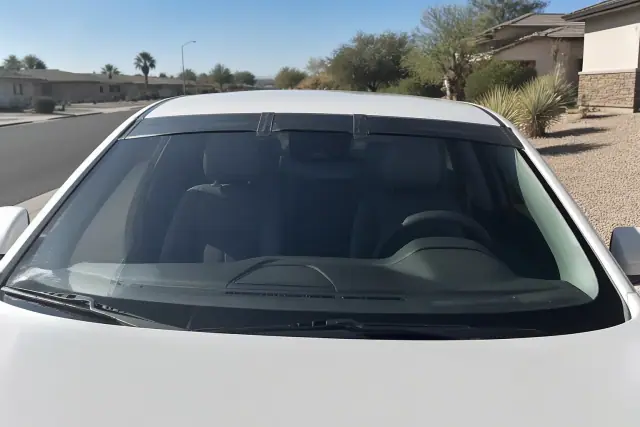
Newly installed windshield with retention tape on a car parked in front of desert landscaping in Phoenix, AZ.

Laminated Front Windshield Glass

Front windshields use laminated safety glass bonded to the vehicle body with urethane. Proper adhesive selection, glass preparation, pinch-weld preparation, and cure time support windshield retention and a quiet, weather-resistant fit.

  • OEM glass matches factory tint, thickness, and bracket placement.
  • Aftermarket glass offers a lower-cost safety-glazing option.
  • Weatherstripping and seals are replaced as needed.
  • Fresh urethane is applied after the old adhesive bed is prepared.
  • Safe-drive-away timing follows the urethane product's required cure.
Request Estimate
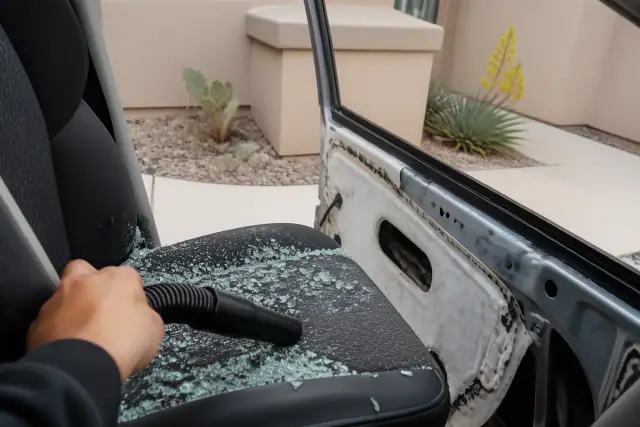
Shop vacuum cleaning tempered glass shards from a car seat at a repair shop in Phoenix, AZ.

Tempered Side, Quarter, and Vent Glass

Most side panes are tempered rather than laminated, so they commonly shatter instead of developing a repairable chip. Replacement restores the correct pane shape, thickness, tint, and travel within the door or fixed opening.

  • Full door glass replacement
  • Quarter window replacement
  • Vent window replacement
  • Tint and thickness matching
  • Door-track and regulator checks
Request Estimate
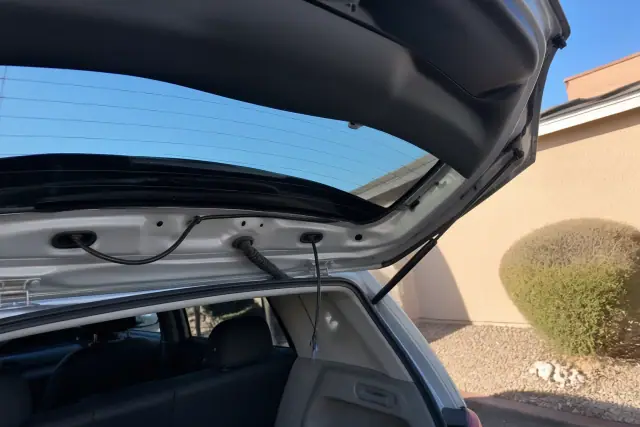
New rear car glass with embedded wiring pigtails installed in a hatchback in Phoenix, AZ.

Rear Glass with Embedded Connections

Rear glass on most vehicles is tempered and may incorporate electrical features directly into the pane. Installation includes reconnecting and testing those features rather than treating the back glass as an isolated piece.

  • Embedded defrost-line connections
  • Antenna-element connections
  • Tempered-glass cleanup and replacement
  • Fit and seal inspection
  • Affected rear-camera recalibration
Request Estimate
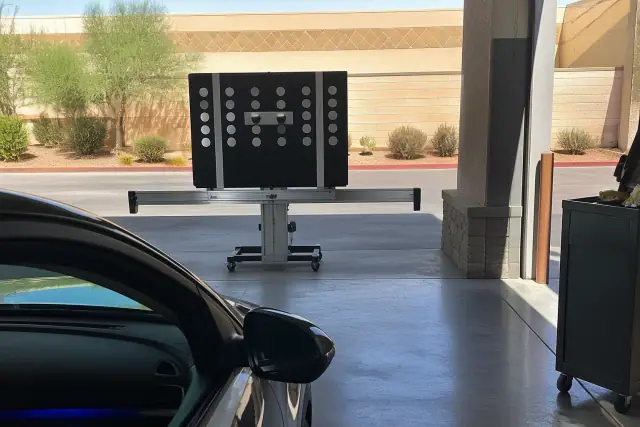
ADAS calibration target set up in front of a vehicle at an auto glass repair shop in Phoenix, AZ.

ADAS Calibration After Replacement

Vehicles built in the last several years often place a forward-facing camera mount on the windshield. Static or dynamic recalibration after replacement aligns lane-departure, lane-keep, and automatic-braking inputs with manufacturer-specified targets and road conditions.

  • Forward-facing camera alignment
  • Static target-based calibration
  • Dynamic road-condition calibration
  • Lane-keep and lane-departure system checks
  • Automatic-braking camera verification
Request Estimate
Finding Your Right Fit

Choosing the Right Auto Glass Approach

A useful recommendation weighs repairability, glass specifications, camera and sensor equipment, insurance coverage, and final cost. The three priorities are an honest damage assessment, a clear OEM-versus-aftermarket choice, and claim support when comprehensive coverage applies.

Honest Damage Assessment

Length, depth, break pattern, edge proximity, and sightline determine whether glass should be repaired or replaced. Damage longer than six inches or touching the edge can undermine windshield retention, while even smaller direct-sightline damage may leave unsafe distortion after resin curing.

OEM and Aftermarket Options

OEM glass reproduces factory specifications, including tint, thickness, and sensor-bracket placement. Quality aftermarket glass meets FMVSS 205 safety-glazing requirements at a lower price point and can suit older vehicles or models without complex sensor packages.

Insurance Claim Support

Comprehensive policies often cover glass damage, and some Arizona carriers waive the deductible for repair or replacement. Coverage and deductibles vary, so the policy is verified before filing; claim documentation can then be submitted directly to participating carriers.

What Sets Us Apart

Why Choose Us for Auto Glass Repair?

Technicians are trained on auto glass replacement practices covering adhesive selection, cure time, and pinch-weld preparation, as well as ADAS recalibration for equipped vehicles. Installations use laminated safety glass, urethane adhesive systems, and procedures aligned with ANSI/AGRSS Z26.1 and practices followed by AGSC-certified shops. The company maintains standing with the Better Business Bureau, supports insurance documentation, and stands behind qualifying chip repairs with its stated lifetime guarantee.

Get a Free Estimate

Road-Debris Rock Chips

Loose gravel from freeway shoulders and construction areas can leave bullseye, star, and combination breaks. Early resin repair may stop a qualifying impact before vibration and Phoenix heat drive a crack farther across the windshield.

Heat-Stressed Cracks

Rapid temperature changes place stress on a windshield that already has a small defect. Parking-lot heat, air conditioning, and intense solar exposure can turn a stable-looking chip into a spreading crack that is no longer repairable.

Edge or Sightline Damage

A crack that reaches the windshield edge affects the bonded perimeter, and damage in the driver's forward field of view can leave visible distortion after repair. These locations weigh heavily toward replacement even when the damaged area appears small.

Shattered Side or Rear Glass

Tempered door and back glass usually breaks into many small pieces, leaving the vehicle open to heat, dust, and weather. Replacement requires cleanup, a correctly matched pane, and checks of door travel, defrost lines, antennas, or camera connections as applicable.

Stuck Power Windows

Heat-cycled plastic components, age, and sand in a door track can strain regulators and motors until a window moves slowly or will not close. Circuit and mechanism testing identifies whether the switch, wiring, motor, cable, gears, or track is responsible.

ADAS Camera Misalignment

Replacing glass changes the mounting reference for a windshield camera, so lane-keep and automatic-braking systems may no longer read the road correctly without calibration. Manufacturer-specified static targets or dynamic driving conditions are used to restore alignment.

How it works

Our Auto Glass Repair Process

The process moves from damage and vehicle identification to the appropriate repair, replacement, testing, and aftercare. Clear checkpoints make it easier to compare glass options, understand insurance coverage, and know when the vehicle is safe to drive.

01.

Describe the Vehicle and Damage

Share the year, make, model, VIN details, affected pane, and visible damage during the phone consultation. Those details identify the likely glass fitment, sensor package, and starting estimate before scheduling.

02.

Assess Repairability and Safety

The technician checks the break type, length, depth, edge proximity, and relationship to the driver's sightline. This determines whether resin repair can preserve the glass or replacement is the safer path.

03.

Confirm Glass and Coverage Options

For replacement, review OEM and aftermarket glass, integrated features, and any required ADAS calibration. If comprehensive coverage applies, verify the glass deductible and decide whether filing a claim makes financial sense.

04.

Repair or Replace the Glass

Repairable breaks are cleaned, pressure-filled with resin, UV-cured, and polished. Replacement work removes the damaged pane, prepares the adhesive bed and pinch weld, applies fresh urethane, and sets the matched glass.

05.

Cure, Reconnect, and Test

Resin repairs harden under UV light, while replacement urethane remains parked through its stated safe-drive-away cure. Defrosters, antenna elements, door travel, seals, and related connections are tested according to the pane replaced.

06.

Calibrate and Review Aftercare

Applicable camera systems receive static or dynamic ADAS calibration before their driver-assistance features are relied upon. Keep a window slightly cracked for the first 24 hours, avoid slamming doors, leave retention tape in place as directed, and avoid car washes for at least 24 to 48 hours.

Get Clear Answers

Schedule an Auto Glass
Repair
Consultation

Call with the vehicle year, make, model, and a description of the damage for a free consultation and phone estimate. There is no obligation, and no appointment is needed to ask about repairability, glass availability, insurance coverage, or ADAS calibration.

Phoenix Driver Help

Phoenix Auto Glass Repair FAQs

These answers cover repairability, replacement pricing, insurance, Arizona windshield rules, aftercare, glass choices, and vehicle-camera calibration. A phone estimate can narrow the answer for a specific year, make, model, and damage pattern.

Call Our Experts

Standard sedans and SUVs in the Phoenix market typically run about $200 to $400, with an average near $290. The broader range can start around $169 and rise to well over $1,000 for luxury or ADAS-equipped vehicles. Year, make, model, glass type, rain sensors, heated glass, acoustic interlayers, and calibration needs all affect the quote.

It often is for drivers with comprehensive coverage and a low or waived glass deductible. The best decision depends on the policy's glass terms and whether a claim could affect the premium, which varies by carrier. Coverage and the deductible can be reviewed before the claim is filed.

Arizona does not have a state law mandating free windshield replacement. Some comprehensive auto policies waive the deductible for glass claims, which can leave a policyholder with little or no out-of-pocket cost. Whether that applies depends on the carrier and plan.

Arizona requires a windshield that does not obstruct the driver's clear view of the roadway, and direct-sightline damage can lead to a citation. The state also restricts windshield tint reflectivity, and factory-installed safety features should remain functional after the glass is serviced. Arizona does not use a statewide routine windshield inspection program.

Wait through the urethane's safe-drive-away cure, which is typically around one hour depending on the product and humidity. Leave a window slightly cracked for the first 24 hours, avoid slamming doors, keep retention tape in place as directed, and avoid car washes for at least 24 to 48 hours. Complete required ADAS calibration before relying on lane-keep or automatic-braking features.

A repairable chip or short crack is cleaned, injected with clear resin under pressure, cured under UV light, and polished smooth. The repair usually takes under 30 minutes. Replacement instead removes the damaged glass and old urethane, prepares the pinch weld, sets new glass with fresh adhesive, and observes the required cure time.

A rock kicked up on the freeway is usually handled through the damaged vehicle owner's comprehensive coverage as an unknown- or no-fault event. A liability claim against another driver may be possible when an identifiable vehicle had an unsecured load, but that can be difficult to prove. Review the policy's glass coverage before deciding how to proceed.

A chip smaller than a quarter or a crack under six inches is often repairable when it has not reached the edge or entered the driver's direct sightline. Break pattern and depth also matter, so bullseye, star, and combination damage should be assessed before a repair is promised. Longer or edge-reaching cracks generally call for replacement.

The installation labor typically takes 45 minutes to an hour. The vehicle then needs a minimum one-hour urethane cure before it is safe to drive, though the exact safe-drive-away time follows the adhesive product and conditions. Camera-equipped vehicles also need any required ADAS calibration.

Most windshield replacements on vehicles with a glass-mounted forward camera require recalibration because the camera's mounting reference changes with the pane. Static calibration uses manufacturer-specified targets, while dynamic calibration uses specified road conditions. The purpose is to restore accurate lane-departure, lane-keep, and automatic-braking inputs.

OEM glass matches the factory specifications for tint, thickness, and sensor-bracket placement and can matter most on vehicles with sensitive ADAS packages. Quality aftermarket glass meets the same federal safety-glazing standard at a lower price point and can work well for older or less complex vehicles. The vehicle features and budget guide the choice.

Most side and rear panes use tempered glass, which shatters into small pieces rather than holding a repairable chip between laminated layers. These panes usually need replacement when broken. Rear glass work may also involve reconnecting defrost lines, antenna elements, and affected camera systems.

Testing covers the switch, wiring harness, motor draw, regulator cable, gears, and track. A five-minute diagnostic can separate a failed regulator assembly or motor from a track that only needs cleaning and lubrication. That avoids replacing parts before the actual fault is identified.