Proudly serving Phoenix, Glendale, Mesa, Scottsdale, Tempe, Chandler & surrounding areasCall or Text 24/7: 480-264-8023
Aerial view of residential neighborhoods, desert ridgelines, and arterial roads in Phoenix, AZ at sunrise.

Auto Glass Replacement in Phoenix, AZ for Sedans, Trucks, and SUVs

Phoenix Windshield Replacement Co. provides auto glass replacement in Phoenix for sedans, trucks, SUVs, and fleet vehicles. Services include windshield replacement and repair, mobile windshield replacement, side and rear glass replacement, ADAS calibration, and window regulator repair. The team installs OEM or quality aftermarket glass and handles both laminated windshields and tempered side or rear windows. Mobile coverage extends across Phoenix and supported communities in the greater Salt River Valley.

Phoenix dashboard temperatures can climb past 190 degrees, while December overnight lows can drop near freezing; that thermal cycling can turn a small chip from Loop 101 or I-17 into a spreading crack. Most vehicles built after 2018 place cameras or sensors at the windshield, so replacement often requires ADAS calibration. Technicians follow AGSC/AGRSS guidance for primer use, adhesive cure time, and safe drive-away intervals. They also use urethane adhesives selected to meet FMVSS 212 and FMVSS 216 occupant-retention requirements, making a careful installation important for both visibility and structural performance.

Physical windshield installation typically takes 45 minutes to one hour, followed by the urethane's required cure period. Call for a free estimate based on your VIN, glass features, and calibration needs.

Phoenix Windshield Replacement Co. provides auto glass replacement across Phoenix, Scottsdale, Tempe, Mesa, Glendale, Chandler, Peoria, and the greater Salt River Valley.

★ ★ ★ ★ ★4.9/5 Average Rating · 20+ Years of Experience · Thousands of Customers Helped · Licensed & Insured · Residential & Commercial

Auto Glass Replacement Options & Benefits

What Is Auto Glass Replacement?

Auto glass replacement removes damaged vehicle glass, prepares the frame or track, and installs glass matched to the vehicle's dimensions and features. The work can involve a laminated windshield, tempered door glass, or rear glass with electrical connections.

Windshields use laminated construction to help the glass remain together after impact, while side and rear windows commonly use tempered glass that breaks into small rounded pieces. The correct replacement must also account for rain sensors, heated wiper areas, acoustic layers, heads-up displays, defroster grids, antennas, and camera brackets when present.

For a windshield, technicians prepare the pinch weld, apply primer and OEM-spec urethane, set the glass, observe the safe drive-away interval, and calibrate windshield-mounted driver-assistance equipment when required. Side, rear, and regulator work includes removing debris, checking tracks or electrical connections, and testing operation before release.

Benefits of Professional Auto Glass Service

A vehicle-specific glass and installation plan protects visibility, fit, sealing, and the operation of equipment attached to the glass. It also gives you a clear path through repair-versus-replacement decisions, calibration, and insurance paperwork.

  • Laminated windshield or tempered side and rear glass matched to the application
  • OEM and quality aftermarket options explained before installation
  • Pinch-weld preparation, primer use, and a continuous urethane bond
  • ADAS calibration performed to the manufacturer's specified procedure
  • Door tracks, regulators, seals, defrosters, and antennas checked when applicable
  • Mobile service available at homes, offices, and apartment complexes
  • Direct billing support with most major insurance carriers
  • Safe drive-away and aftercare instructions provided before release
Phoenix Auto Glass Services

Complete Auto Glass Services

Choose service based on the damaged panel, the size and position of the break, and the equipment connected to the glass. Phoenix Windshield Replacement Co. handles the following replacement, repair, calibration, and window-function needs.

Windshield Replacement

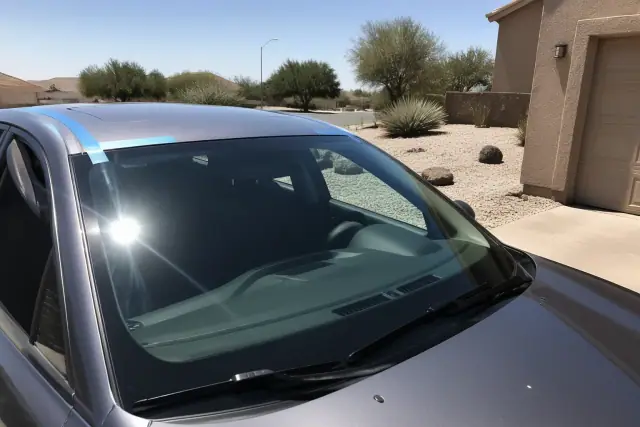
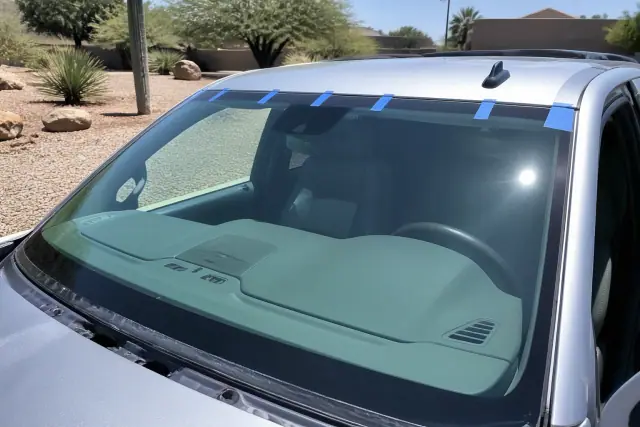
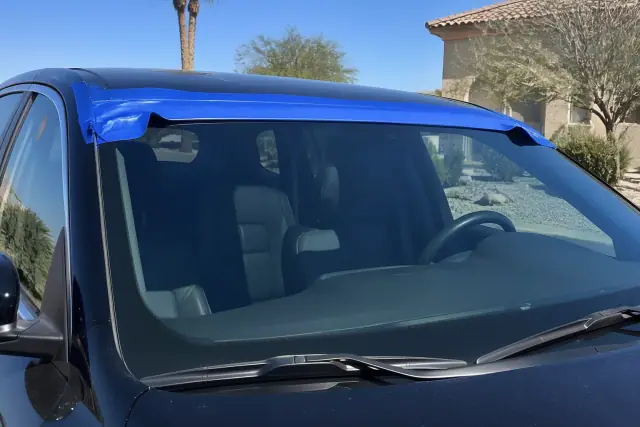
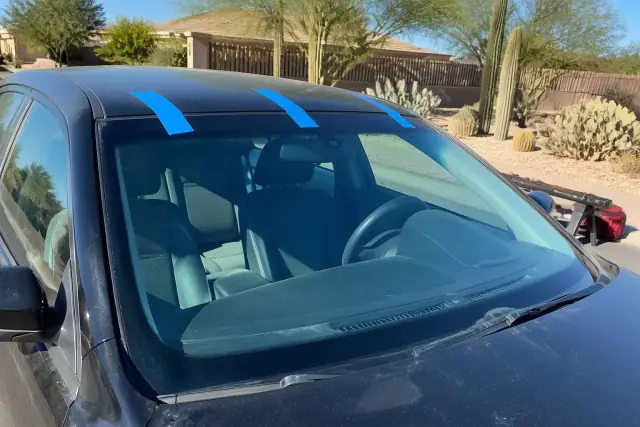
Newly installed car windshield with retention tape on a vehicle in a Phoenix, AZ desert driveway.

Laminated replacement glass is sourced for domestic, Japanese, European, and Korean makes, from base-model sedans to heavy-duty pickups. The physical installation typically takes 45 minutes to one hour, then the vehicle remains parked for the adhesive's specified cure time.

Request Estimate

Mobile Windshield Replacement

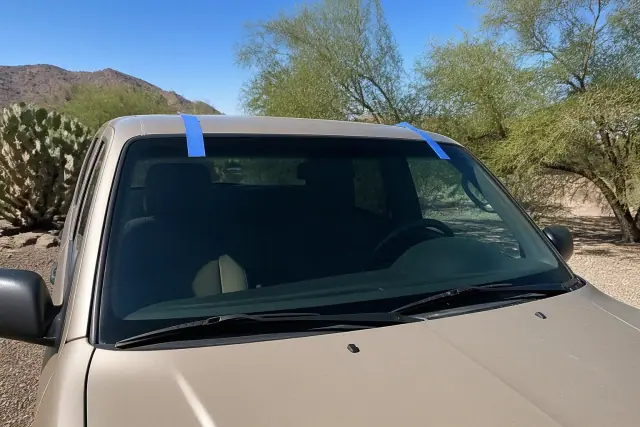
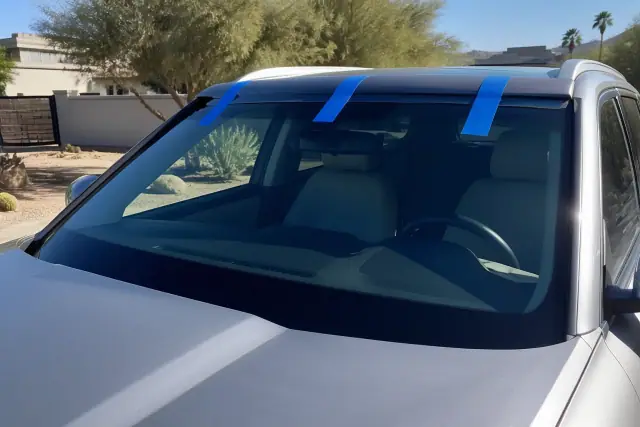
Newly installed car windshield held by retention tape in a Phoenix, AZ driveway.

Technicians bring glass, adhesive, primers, and available calibration equipment to a driveway, office lot, or apartment complex. Most Phoenix rock-chip and crack calls can be handled the same day when received before early afternoon, subject to glass availability and whether calibration needs a controlled indoor setup.

Request Estimate

Windshield Chip and Crack Repair

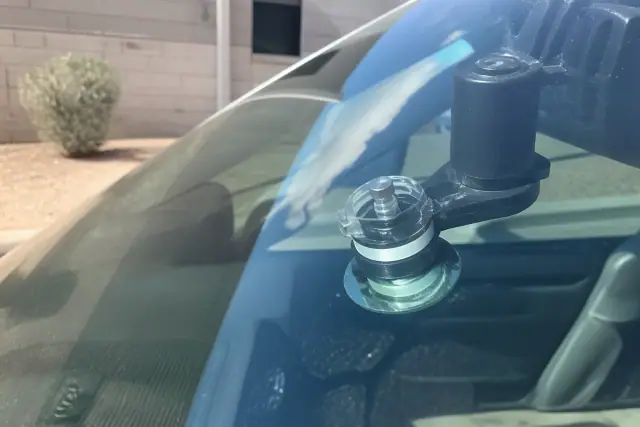
Resin injector tool repairing a windshield star break in Phoenix, AZ.

An early rock-chip repair often takes fifteen to thirty minutes. Vacuum-assisted resin fills the break and is cured with UV light to restore most structural integrity and help stop heat cycling from spreading the damage; free chip repair is available for the life of your glass.

Request Estimate

Side Window Replacement

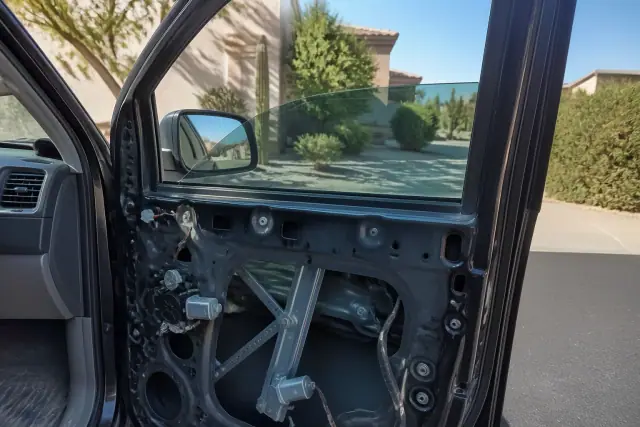
Side window glass replacement on a car with the interior panel removed in Phoenix, AZ.

Passenger and driver-side windows use tempered glass cut to the vehicle's factory dimensions. After breakage, technicians clear debris from the door cavity and track, install the new glass, and test the regulator and seals for smooth movement, wind noise, and water intrusion.

Request Estimate

Rear Glass Replacement

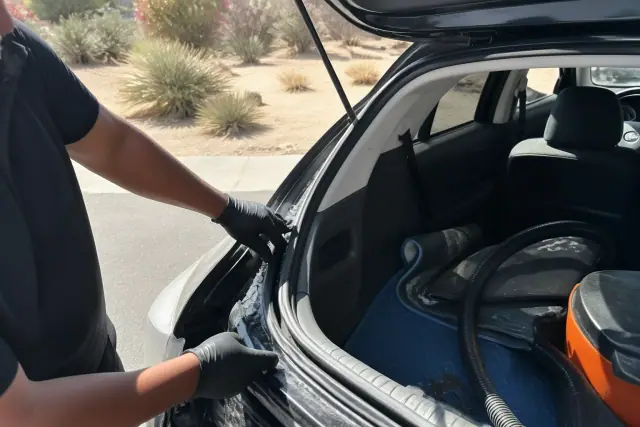
Technician removing broken glass fragments from a hatchback trunk during a rear glass replacement in Phoenix, AZ.

Rear glass may contain embedded defrost lines or an antenna in addition to the tempered panel. Replacement includes reconnecting those elements and testing defroster-circuit continuity before the vehicle is released.

Request Estimate

Window Regulator Repair

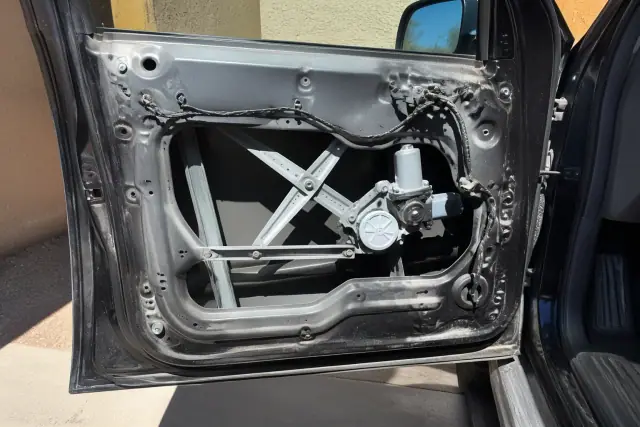
A vehicle door with the interior trim panel removed, showing the window regulator and motor in Phoenix, AZ.

A worn cable, stripped motor gear, broken plastic clip, or glass that has left its track can keep a power window from moving or sealing. Phoenix heat commonly weakens regulator parts in vehicles over eight years old, so the repaired window is tested through multiple full up-and-down cycles.

Request Estimate
Choosing the Right Fit

Glass, Calibration & Claim Options

The right replacement is more than a pane of glass. Vehicle equipment, camera mounting, optical features, installation setting, and insurance coverage all shape the recommended option and final estimate.

New windshield installed on a vehicle with retention tape in a sunny Phoenix, AZ desert landscape.

OEM Windshield Glass

OEM glass comes from manufacturers that supply original equipment for the vehicle. It can be the preferred fit when camera brackets, optical clarity, acoustic layers, or specialty display features make exact configuration especially important.

  • Original-equipment manufacturer source
  • Vehicle-specific camera bracket placement
  • Optical clarity matched to the original configuration
  • Options for acoustic laminated glass or heads-up display
  • Rain-sensor and heated-wiper features matched when equipped
Request Estimate
Newly installed windshield with retention tape on a vehicle in Phoenix, AZ.

Aftermarket Auto Glass

Quality aftermarket glass offers a lower-cost alternative while meeting DOT and ANSI Z26.1 safety-glazing standards; auto glass also falls under federal FMVSS 205 glazing requirements. The team reviews fit, optical quality, and compatibility with the vehicle's brackets and sensors before recommending it.

  • DOT-compliant safety glazing
  • ANSI Z26.1 standard compatibility
  • Lower-cost option for suitable vehicles
  • Bracket and sensor fit reviewed before selection
  • Tradeoffs explained for the specific VIN and glass features
Request Estimate
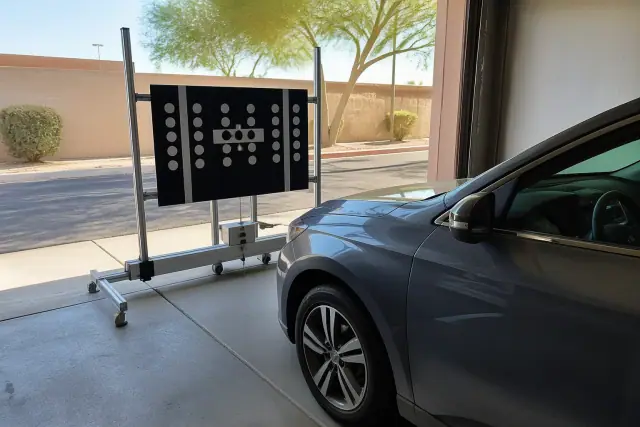
ADAS calibration target stand aligned in front of a vehicle at a service bay in Phoenix, AZ.

ADAS Calibration

Replacing a windshield can move a forward-facing camera by only a few millimeters and still affect lane or distance readings. Static or dynamic recalibration returns the system to the manufacturer's diagnostic tolerances and produces pass documentation.

  • Static target-board calibration at measured distances
  • Dynamic calibration at the specified road speed
  • Clear lane markings used when the procedure requires them
  • Lane-departure, braking, and cruise-control camera alignment
  • Calibration results documented for insurance and resale records
Request Estimate
Newly installed car windshield with retention tape on a vehicle in Phoenix, AZ.

Mobile Auto Glass Service

Mobile units cover Arizona's capital, described in the source as the country's fifth-most populous city, across a 517.9-square-mile footprint. Phoenix has over 1.6 million residents, with another 3.5 million in the surrounding metro, so bringing equipment to the vehicle can eliminate a difficult extra trip.

  • Driveway, office-parking, and apartment-complex appointments
  • Glass, adhesive, primers, and tools brought to the vehicle
  • On-site calibration when the vehicle and target setup allow
  • Indoor static calibration scheduled when a controlled space is required
  • No extra mobile trip charge in most covered areas
Request Estimate
Newly installed car windshield with retention tape held in place at a jobsite in Phoenix, AZ.

Insurance Claim Support

Comprehensive coverage commonly applies to glass damage subject to the policy's deductible, and a separate full-glass endorsement may change what you owe. The company confirms coverage details and supports direct billing with most major carriers.

  • Coverage and deductible confirmed before scheduling
  • Direct billing available with most major insurers
  • Photos and VIN details submitted to the glass claims line
  • Calibration documents included when the claim requires them
  • Cash and insurance paths explained before work begins
Request Estimate
Finding the Right Fit

Choosing the Right Auto Glass Approach

A sound recommendation starts with the damaged panel, vehicle features, break location, and manufacturer procedures. The team compares repair with replacement, matches the glass, and plans calibration or electrical checks before work begins.

Vehicle-Specific Glass Matching

The VIN and installed features guide the choice between OEM and aftermarket glass. Camera brackets, rain sensors, acoustic lamination, heated wiper areas, heads-up displays, defroster grids, and antennas are considered before ordering.

Safety-Focused Installation

Technicians follow AGSC/AGRSS safe-installation guidance for pinch-weld preparation, primer, adhesive selection, cure time, and the minimum drive-away interval. Those details help the windshield support occupant retention, roof performance, and passenger-airbag operation.

Calibration and Function Checks

ADAS calibration is handled to the vehicle manufacturer's procedure instead of being treated as an afterthought. Before release, the team also checks urethane placement, moisture sealing, trim fit, window movement, or rear-glass electrical continuity as the job requires.

When Repair or Replacement Makes Sense

Auto Glass Problems We Address

Glass damage is evaluated by panel type, size, depth, edge involvement, visibility, and connected vehicle equipment. These common conditions help determine whether resin repair, glass replacement, calibration, or regulator work is the appropriate next step.

Request a Free Assessment

Thermal Stress Cracks

Daily swings between extreme dashboard heat and cool nights place repeated stress on laminated glass. A chip collected along Loop 101, I-17, or Loop 202 can spread within days under that thermal cycling.

Rock Chips and Small Breaks

A chip under 1 inch or a star break or bullseye under 3 inches may be repairable when it is outside the driver's sightline. Early resin repair is less involved than full replacement and helps prevent further spreading.

Long or Line-of-Sight Cracks

A crack longer than 6 inches, damage at the glass edge, or a break directly in the driver's line of sight usually points to replacement. These conditions can affect visibility or the structural performance expected from the windshield.

Shattered Side Windows

Break-ins around downtown parking structures, Chase Field, and Desert Ridge can leave tempered glass throughout a door cavity and track. Replacement includes debris removal, correctly sized glass, and checks for smooth regulator movement and sealing.

Rear Glass Feature Damage

A broken back window can interrupt visibility as well as embedded defroster or antenna functions. Those connections must be restored with the replacement, and the defroster circuit is tested for continuity.

Window Regulator Failure

Grinding, crooked movement, a window that drops into the door, or glass that will not close can indicate cable, clip, track, gear, or motor trouble. Repair is appropriate when the motor remains strong; structural or motor failure may call for full regulator replacement.

How It Works

Our Auto Glass Replacement Process

Each appointment follows a vehicle-specific path from damage review through release instructions. Windshield jobs include glass-feature matching and calibration planning, while side, rear, and regulator jobs include the corresponding track, seal, or electrical checks.

01.

Review Damage and Vehicle Features

Share the VIN, damaged panel, break size and location, and features such as cameras, rain sensors, heads-up display, defroster lines, or an antenna. This identifies the glass and equipment needed.

02.

Confirm Estimate and Coverage

Review OEM and aftermarket choices, calibration needs, mobile or shop service, and the written estimate. If insurance is involved, coverage and deductible details are confirmed before scheduling.

03.

Remove Glass and Prepare the Opening

Technicians remove the damaged panel, clear broken glass where needed, and prepare the pinch weld, door cavity, or track. Windshield work includes the specified primer and urethane preparation.

04.

Install and Secure the Replacement

The matched laminated or tempered glass is positioned to factory dimensions. Windshields receive an OEM-spec urethane set, while side and rear panels are connected to their tracks, seals, defrosters, or antennas as applicable.

05.

Calibrate Cameras When Required

ADAS-equipped vehicles receive the manufacturer's static or dynamic procedure. Static work uses target boards at measured distances; dynamic work uses the specified road speed and clear lane markings.

06.

Inspect, Test, and Explain Aftercare

The final check covers glass fit, trim, moisture sealing, calibration results, regulator movement, or electrical continuity as appropriate. Windshield customers receive the adhesive's minimum safe drive-away time and practical care instructions.

Ready to Restore Your Glass

Schedule Your Auto Glass
Estimate

Request a free estimate for windshield, side-window, rear-glass, ADAS calibration, or regulator work in Phoenix. Have your VIN and a description of the damage ready so the team can match the glass and identify any connected features.

Auto Glass Help

Phoenix Auto Glass Replacement FAQs

Get practical answers about Phoenix windshield and vehicle-glass costs, repair limits, calibration, insurance, mobile appointments, and aftercare. Exact recommendations depend on the VIN, damaged panel, glass features, and location of the break.

Call Our Auto Glass Team

The source describes an Arizona range of $95 to $1,706, with an average around $289, depending on the vehicle, glass, and calibration needs. Standard cash work is commonly closer to $275 to $500-plus before calibration, while specialty glass with heads-up display, acoustic lamination, or rain sensors can run well past $600. Phoenix Windshield Replacement Co. provides a free VIN-based estimate, and a cash discount rate is often available.

A chip under 1 inch or a star break or bullseye under 3 inches may be repairable when it is shallow and outside the driver's line of sight. A crack longer than 6 inches, edge damage, or a line-of-sight break generally calls for replacement. The technician evaluates size, depth, and position before recommending either option.

The physical installation typically takes 45 minutes to one hour. The vehicle must then remain parked through the urethane's minimum safe drive-away interval, which is often one hour or more but depends on the adhesive, temperature, and humidity. Your technician will provide the exact release time for the job.

Calibration is commonly required when a forward-facing camera or sensor is mounted at the windshield, especially on many 2018-and-newer vehicles. Moving the camera even a few millimeters can affect lane and distance readings. The required static or dynamic procedure is completed to the manufacturer's diagnostic tolerances.

OEM glass comes from manufacturers that supply the vehicle's original equipment, while quality aftermarket options can meet DOT and ANSI Z26.1 safety-glazing standards at a lower cost. The right choice depends on optical features, camera-bracket fit, sensors, acoustic layers, and budget. The company explains those tradeoffs for the specific VIN.

Comprehensive coverage typically applies to glass damage subject to the policy's deductible. Arizona does not automatically require zero-deductible replacement, although some policies add full-glass coverage. The company confirms coverage details and bills most major carriers directly.

There is no automatic state program that makes every windshield replacement free. Your out-of-pocket amount depends on comprehensive coverage, the deductible, and whether the policy includes a separate zero-deductible glass endorsement. Chip repair is more commonly covered without a deductible because it costs less than replacement.

That depends on the terms of your policy rather than a blanket Arizona rule. A standard comprehensive claim normally applies the listed deductible, while a glass endorsement may provide a lower or zero deductible. Coverage and the expected amount are confirmed before the appointment.

Wait through the stated safe drive-away time and keep any retention tape in place until the technician says it can be removed. Avoid slamming doors for the first 24 hours, and skip the car wash for at least 24 to 48 hours. Avoid rough roads or highway speeds until the adhesive has fully cured.

Yes. Mobile technicians can bring glass, adhesives, primers, and tools to a driveway, office parking lot, or apartment complex across the supported service area. If static calibration requires a controlled indoor environment, that part of the appointment is scheduled at the facility.

Windshields use laminated glass that is designed to hold together after impact, while side and rear windows commonly use tempered glass that breaks into small rounded pieces. Rear glass may also contain a defroster grid or antenna. Replacement methods and final checks are matched to those different constructions and features.

Common causes include a worn regulator cable, stripped motor gear, broken plastic clip, or glass that has slipped out of its track. Phoenix heat can accelerate wear in older regulator assemblies. The team checks whether the motor and structure support repair or whether full regulator replacement is more reliable.

Ask how the installer follows AGSC/AGRSS guidance for primer, adhesive, cure time, and safe drive-away intervals. Confirm that the company offers the glass option your vehicle needs, can complete required ADAS calibration, and explains insurance billing and pricing before work starts. Phoenix Windshield Replacement Co. handles calibration and provides documentation after a passing result.