Proudly serving Phoenix, Glendale, Mesa, Scottsdale, Tempe, Chandler & surrounding areasCall or Text 24/7: 480-264-8023
Aerial view of residential neighborhoods, desert ridgelines, and arterial roads in Phoenix, AZ at sunrise.

Window Regulator Repair in Phoenix, AZ for Power Window Systems and Motors

Phoenix Windshield Replacement Co. provides window regulator repair in Phoenix, AZ, with mobile power window diagnosis, targeted regulator rebuilds, full assembly replacement, and motor replacement. Our team also handles windshield replacement and repair, mobile windshield replacement, auto glass replacement and repair, car and side window replacement, rear glass replacement, and ADAS calibration. We work on cable-and-pulley and scissor-style regulators in driver, passenger, and rear doors. Each quote is based on the vehicle's make, model, VIN when available, and confirmed failure point.

Phoenix pavement temperatures regularly climb past 150 degrees in summer, while a parked vehicle's cabin can exceed 190 degrees within an hour. Repeated heat cycling dries lubricant and stresses plastic clips, nylon rollers, and lift cables inside the door. A stuck-down window also leaves the interior exposed to monsoon moisture, dust, and security risks. Our Automotive Service Excellence-certified technicians follow ANSI/AGRSS 002 safety practices on glass-related work.

Many jobs can be completed in one mobile visit because our vans carry diagnostic tools, regulator assemblies, motors, cables, and tracks. Customers who can use a targeted rebuild or repair may save 40 to 70 percent compared with a dealership quote. Same-day appointments are available across most of the Phoenix metro area.

Phoenix Windshield Replacement Co. provides window regulator repair in Phoenix and mobile service across Scottsdale, Tempe, Mesa, Glendale, Chandler, Peoria, and Surprise.

★ ★ ★ ★ ★4.9/5 Average Rating · 20+ Years of Experience · Thousands of Customers Helped · Licensed & Insured · Residential & Commercial

Window Regulator Repair Options & Benefits

What Is a Window Regulator?

A window regulator is the mechanical assembly inside a vehicle door that raises and lowers the glass along a track. A small electric motor turns a gear, which moves a cable or arm and guides the glass through felt- or rubber-lined channels.

Most vehicles use either a cable-and-pulley regulator or a scissor-style regulator. A cable, pulley, motor, gear, clip, roller, or channel failure can interrupt the entire movement chain even when the other parts still work.

Accurate diagnosis separates a bad switch, fuse, wiring connection, or motor from a jammed mechanical assembly. Checking each component before replacing parts helps identify the actual failure and avoids unnecessary spending.

Benefits of Professional Window Regulator Repair

Professional service restores controlled glass movement while protecting the door's trim, wiring, channels, and safety features. The right repair depends on whether the fault is electrical, mechanical, or a combination of both.

  • Restores a secure, fully closing window
  • Keeps door glass aligned in its channel
  • Separates mechanical faults from electrical faults
  • Allows targeted repair when the assembly is reusable
  • Brings mobile tools and parts to your location
  • Matches OEM or quality aftermarket parts to the vehicle
  • Supports auto-up and anti-pinch recalibration when required
  • Reduces the risk of damaged trim clips or door wiring
Power Window Services

Phoenix Window Regulator Services

Our service starts with diagnosis and can move to a targeted rebuild, complete regulator replacement, motor installation, side-window work, or mobile repair at your location. Recommendations reflect the failed component, the door's access requirements, and the parts that fit the specific vehicle.

Window Regulator Diagnosis

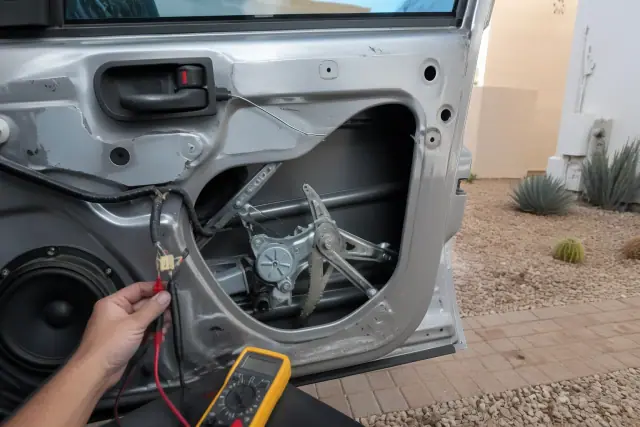
Technician performing a window regulator diagnosis on a car door in Phoenix, AZ.

We check the regulator mechanism, motor, switch assembly, wiring harness, and glass channel to locate the real point of failure. Testing the electrical and mechanical sides separately prevents a working motor or regulator from being replaced unnecessarily.

Request Estimate

Targeted Regulator Repair

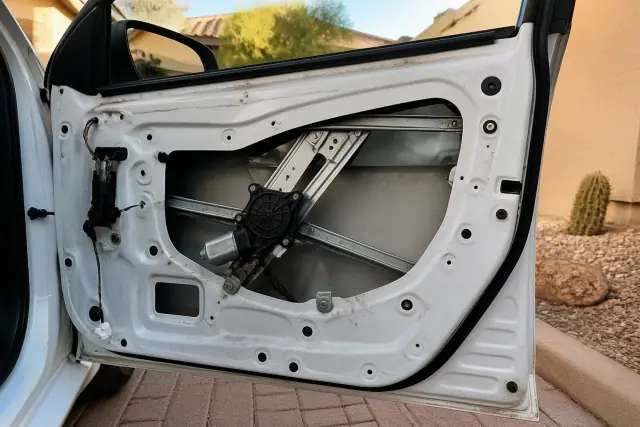
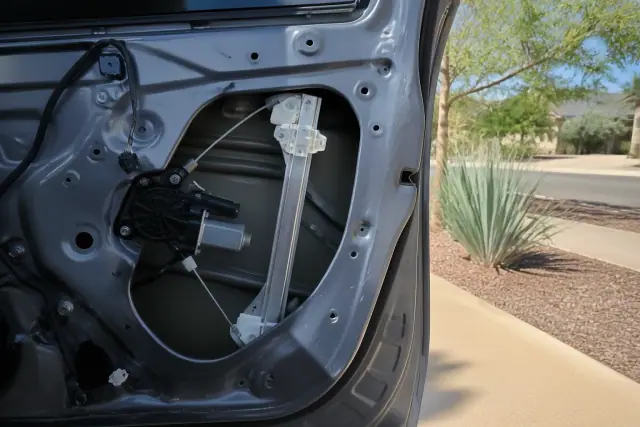
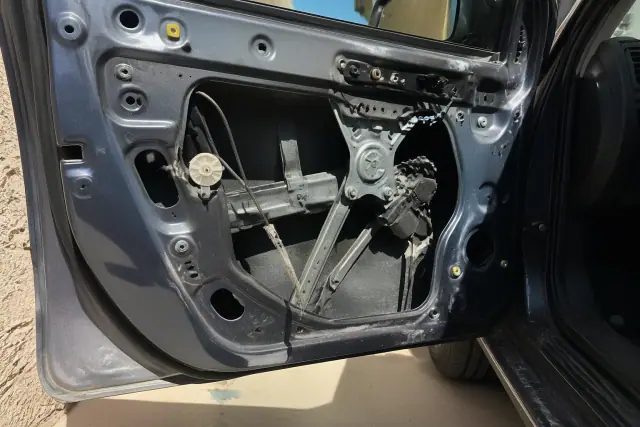
Vehicle door panel removed to show a window regulator repair in progress at a jobsite in Phoenix, AZ.

A cable that has jumped its track or a broken clip or roller may allow the existing assembly to be rebuilt. This approach replaces the failed component while retaining serviceable parts instead of defaulting to a full assembly swap.

Request Estimate

Full Regulator Replacement

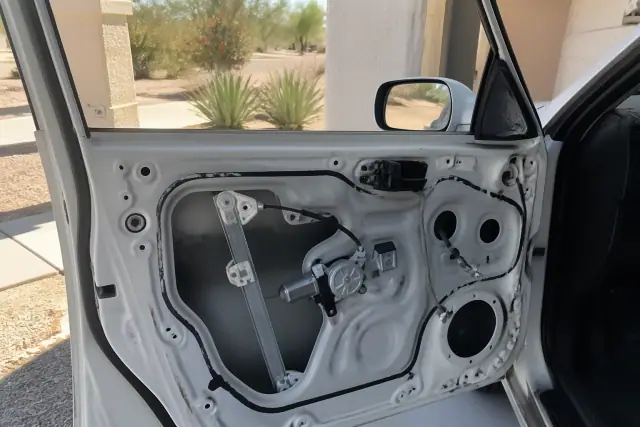
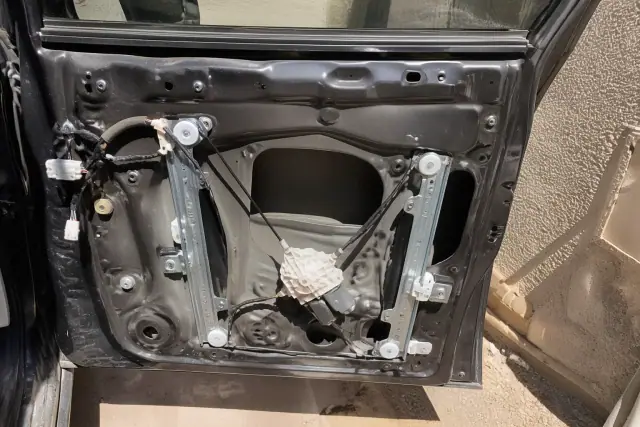
Technician repairing a car window regulator inside a door panel in Phoenix, AZ.

A bent regulator frame, severe track damage, or gear teeth stripped beyond repair usually calls for a complete assembly replacement. We confirm the damage first and select a regulator designed for the vehicle's year, make, and model.

Request Estimate

Power Window Motor Replacement

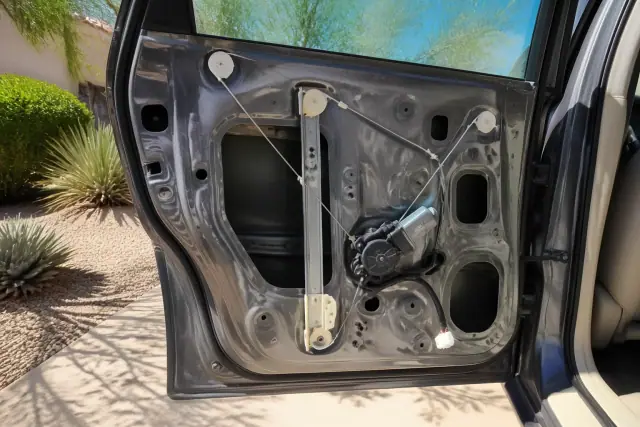
A vehicle door with the interior panel removed to show a window regulator and motor repair in Phoenix, AZ.

A motor with worn brushes, a burned winding, or an internal electrical failure needs replacement. Installation includes checking amperage draw and gear engagement, plus module reprogramming when auto-up or anti-pinch functions require it.

Request Estimate

Side Window Regulator Repair

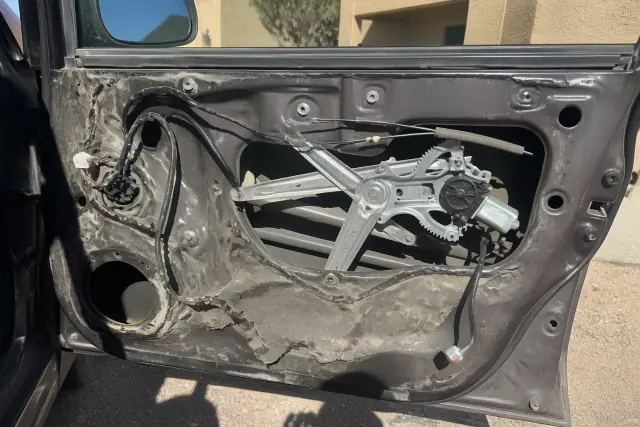
Exposed vehicle window regulator assembly and electric motor inside an open car door in Phoenix, AZ.

Driver, passenger, and rear door regulators can fail for different reasons. Frequently used driver windows experience more cycles, while less-used passenger and rear mechanisms may stiffen as grease dries in Phoenix's heat.

Request Estimate

Mobile Window Regulator Service

Open car door interior showing a window regulator assembly and electric motor during repair in Phoenix, AZ.

Mobile service brings diagnostic equipment, tools, and available regulator parts to a home, office, job site, or parking location. It avoids driving across Phoenix traffic with glass that is stuck down, tilted, or unable to close securely.

Request Estimate
Repair & Replacement

Window Regulator Repair & Replacement Options

Regulator design, failure type, door position, and vehicle features all shape the repair. These categories show how the mechanism and symptoms guide a recommendation without assuming that every power-window problem needs the same parts.

Cable-and-pulley window regulator repair inside a car door at a jobsite in Phoenix, AZ.

Cable-and-Pulley Regulators

A motor-driven gear pulls a cable around pulleys to move the glass through its channel. Wear in one small component can stop the assembly even when the frame and motor remain usable.

  • Motor-driven cable movement
  • Pulleys and nylon rollers
  • Plastic clips securing the glass
  • Felt- or rubber-lined glass channels
  • Potential rebuild when the frame is sound
Request Estimate
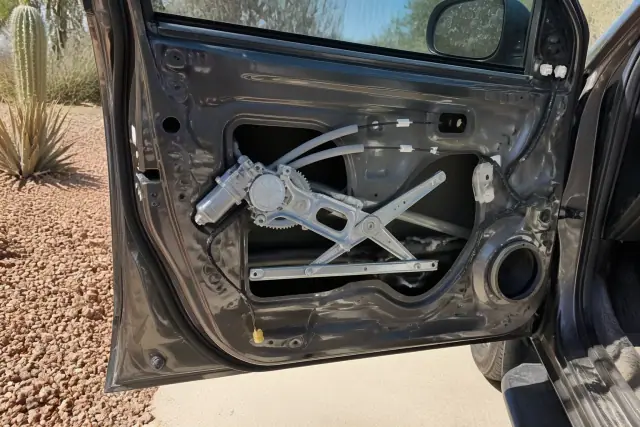
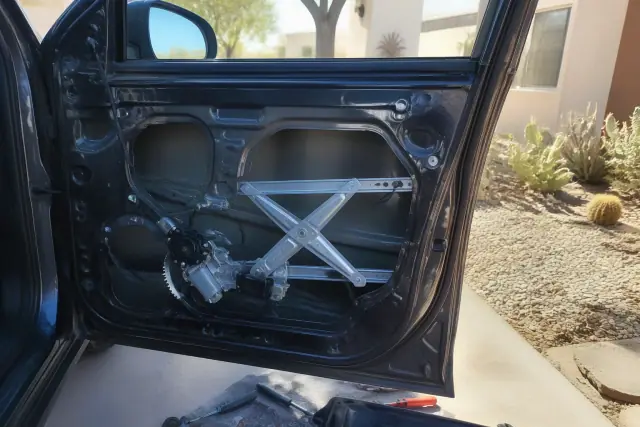
Scissor-style window regulator repair inside a car door at a residential job site in Phoenix, AZ.

Scissor-Style Regulators

A scissor-style regulator uses crossing metal arms to translate the motor's rotation into vertical glass movement. Arm, gear, pivot, and frame condition determine whether adjustment, component repair, or full replacement is appropriate.

  • Crossing lift-arm design
  • Gear-driven vertical movement
  • Pivot and arm alignment checks
  • Frame inspection for bends
  • Clean motor-to-gear engagement
Request Estimate
Frayed window regulator cable and misaligned pulley inside an open car door at a repair shop in Phoenix, AZ.

Mechanical Regulator Failures

Mechanical failures affect the parts that physically support and move the glass. Some can be repaired in place, while a badly bent frame or severely damaged track may require the full regulator assembly.

  • Snapped or stretched lift cables
  • Stripped plastic gears
  • Broken clips or rollers
  • Bent tracks or regulator frames
  • Heat-dried channel lubricant
Request Estimate
Exposed car door window regulator and electric motor being repaired in Phoenix, AZ.

Motorized Window Failures

Electrical diagnosis checks whether power reaches the motor and whether the motor still produces the torque needed to lift the glass. Cleaning contacts or repairing a connection may solve some faults, but internal motor damage requires replacement.

  • Fuse and circuit checks
  • Switch assembly testing
  • Wiring harness inspection
  • Motor torque and amperage verification
  • Auto-up and anti-pinch module setup
Request Estimate
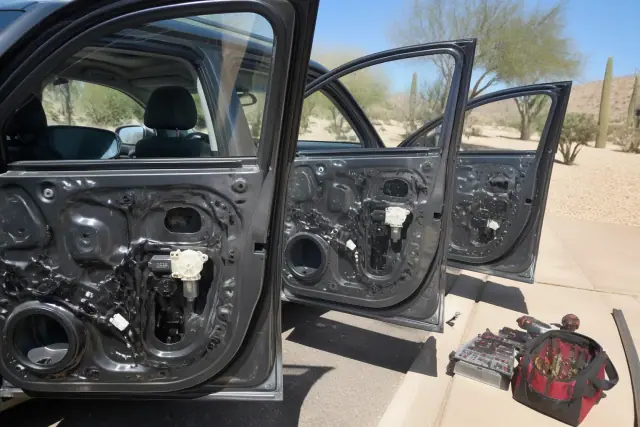
Car doors with interior panels removed for window regulator repair in Phoenix, AZ.

Front, Passenger & Rear Doors

Door position changes both the likely wear pattern and the access needed for repair. Rear doors on many sedans and crossovers require added trim and wiring disassembly, while driver windows commonly wear from frequent use.

  • Higher use cycles at the driver door
  • Stiffened grease in less-used passenger windows
  • Additional rear-door trim access
  • Child-safety-lock wiring considerations
  • Vehicle-specific regulator assemblies
Request Estimate
Finding the Right Fix

Choosing the Right Window Regulator Approach

The right approach starts with the failure point, not a preset parts package. A displaced cable or broken clip may support a targeted repair, while a burned-out motor, bent frame, or badly stripped gear can justify replacement; OEM parts are used when factory tolerances or vehicle features call for them, and quality aftermarket parts are considered when they meet or exceed OEM specifications.

Diagnostic-First Quotes

We use the VIN and symptom description when possible, then confirm the failure inside the door. You receive a firm price before work starts instead of a guess based only on a national average.

Vehicle-Matched Parts

Parts selection reflects the regulator design and the vehicle's tolerances. OEM regulator and motor assemblies are available when factory fit or anti-pinch calibration calls for them, while suitable aftermarket components can lower parts cost without sacrificing function.

Trained Auto Glass Standards

Our technicians hold Automotive Service Excellence certifications and follow ANSI/AGRSS 002 safety practices on glass-related jobs. Those practices carry into careful handling of door glass, trim, channels, and adjacent wiring during regulator work.

What Sets Us Apart

Why Choose Us for Window Regulator Repair?

Our technicians separate electrical problems from mechanical failures before recommending parts, explain when a rebuild or replacement fits the damage, and provide the price before work begins. Mobile service brings that diagnostic-first process to the vehicle, with parts options and calibration steps matched to its design.

Request Repair Estimate

Window Will Not Move

A window that does not move can result from a blown fuse, failed switch, wiring fault, burned-out motor, or jammed regulator. Testing the circuit before opening the assembly helps narrow the problem quickly.

Grinding, Clicking or Humming

Grinding or clicking often points to a stripped gear, damaged roller, or displaced cable. A motor that hums while the glass stays still can indicate that electrical power is present but the mechanical regulator is no longer transferring motion.

Glass Tilts or Drops

Glass that tilts in the track or drops when the door closes may have a broken clip, roller, or cable connection. Continued operation can bind the glass against the channel and increase stress on the remaining parts.

Slow or Uneven Movement

Slower-than-normal or uneven travel can be an early sign of cable stretch, stiffened grease, channel friction, or weakening motor torque. Addressing the symptom before the window stops completely may preserve more of the existing assembly.

Stuck-Down Window Exposure

A window left down near South Mountain, in Ahwatukee, or elsewhere in the Valley can expose upholstery and electronics to monsoon moisture and blowing dust. It also leaves belongings and the cabin less secure until the glass closes again.

Auto-Up or Anti-Pinch Problems

Newer one-touch windows may need the control module reprogrammed after motor replacement so it recognizes the new motor's resistance curve. Without that step, the glass may move but the auto-up or anti-pinch safety function may not operate correctly.

How It Works

Our Window Regulator Repair Process

The process moves from symptom details to electrical testing, mechanical inspection, a clear recommendation, and verified operation. Each step is intended to identify the smallest reliable repair before parts are installed.

01.

Describe the Symptom & Vehicle

Tell us what the window is doing and provide the year, make, model, and VIN when available. Those details help identify the likely regulator design and compatible parts before dispatch.

02.

Check the Electrical Circuit

The technician checks the fuse, switch assembly, wiring connections, and power at the motor. This determines whether the fault is upstream of the regulator mechanism.

03.

Inspect the Regulator & Motor

We inspect the cables, pulleys, arms, gears, clips, tracks, glass channel, and motor condition. Testing both systems reveals whether one side can remain in service.

04.

Review the Repair & Price

After confirming the failure, we explain whether a targeted repair, motor replacement, or complete regulator assembly is appropriate. A firm price is provided before any work begins.

05.

Complete the On-Site Work

The technician rebuilds the serviceable mechanism or installs the matched regulator or motor at the vehicle's location. Door trim, wiring, and glass channels are handled carefully throughout reassembly.

06.

Verify Travel & Safety Features

We confirm smooth glass travel, channel alignment, clean gear engagement, and motor amperage against manufacturer specifications. Vehicles with one-touch operation receive auto-up and anti-pinch setup when required.

Restore Your Power Window

Schedule a Window Regulator Repair Consultation

Tell us which window is affected, what you hear or see, and your vehicle details. We can discuss mobile scheduling and provide a vehicle-specific estimate after diagnosis confirms the failed component.

Window Regulator Help

Window Regulator Repair FAQs

These answers cover regulator costs, repair-versus-replacement decisions, Phoenix heat damage, mobile service, motor diagnosis, and proper power-window operation.

Call About Window Repair

Nationally, full window regulator replacement typically runs between $410 and $554, with labor making up roughly $144 to $211. Rear window regulator work often ranges from $613 to $700 because added door-panel disassembly may be required. Your actual price depends on the vehicle and failure, so we diagnose first and quote the confirmed repair.

Repair may be possible when the failure is limited to a cable, clip, roller, or track and the frame remains usable. A bent frame, internally failed motor, or gear teeth stripped beyond repair usually requires replacement. We inspect the mechanism before recommending either option.

Extreme heat can dry lubricant on cables and tracks and make plastic clips brittle. Monsoon dust can enter door channels and increase wear on rollers and guides. Repeated daily use adds more stress to those heat-affected components.

A nonmoving window can be caused by a fuse, switch, wiring connection, motor, or mechanical regulator problem. We test the electrical circuit first, then inspect the mechanism if power reaches the motor but the glass still does not move. That sequence prevents guessing at parts.

Most straightforward single-window repairs take between 60 and 90 minutes on-site after the technician confirms the failure. Rear door disassembly, motor replacement, difficult access, or anti-pinch recalibration can take longer. The technician gives a more specific time estimate after inspection.

Modern door panels may contain delicate trim clips, wiring harnesses, and airbag components, and the same symptoms can come from electrical or mechanical faults. Professional diagnosis helps avoid buying the wrong part and reduces the risk of trim or wiring damage during disassembly.

Yes. Mobile auto glass service covers Phoenix and the surrounding metro service area, with diagnostic tools and available regulator parts brought to your home, work, job site, or parking location. Same-day scheduling is available in most cases when the route allows it.

Watch for slow or uneven movement, glass that tilts, a window that drops slightly when the door closes, or grinding and clicking noises. A motor that hums without moving the glass can also signal a disconnected cable or damaged gear. Early diagnosis may allow a smaller repair.

We use OEM regulator or motor assemblies when a vehicle's tolerances or anti-pinch functions call for factory parts. Quality aftermarket components may be offered when they meet or exceed OEM specifications and provide a reliable lower-cost option. The choice depends on the vehicle's design and available fit.

Rear doors often need more trim and wiring disassembly, while integrated one-touch and anti-pinch features add calibration work. Luxury and European vehicles can have regulator assemblies priced two to three times higher than mainstream domestic or Japanese vehicles. The year, make, model, and exact failure determine the quote.

An electric motor turns a gear that pulls a cable or drives a scissor-style arm. That motion raises or lowers the glass along a track inside felt- or rubber-lined guides. A failure anywhere in that movement chain can stop or misalign the window.

Sometimes. Dirty contacts or a repairable connection may be addressed without replacing the regulator, and a good motor can remain in place when only the mechanical assembly has failed. Worn brushes, burned windings, or internal electrical damage generally require a replacement motor.

Some one-touch systems must learn the replacement motor's resistance curve so the control module can recognize normal travel and an obstruction. Reprogramming after motor installation helps the auto-up and anti-pinch functions operate as designed instead of only making the glass move.