Reset the Camera's Reference Point
New glass, a changed urethane bed, and a disturbed camera bracket can alter the factory reference point. Recalibration realigns the camera so it reads the road from its new installed position.
Yes-if your vehicle has a forward-facing camera or radar sensor near the windshield, recalibration is a necessary part of replacement. Phoenix Windshield Replacement Co. includes calibration with windshield replacement on ADAS-equipped vehicles because removing and resetting the glass changes the camera's reference point, even when the bracket moves only fractions of a millimeter.
New glass, a changed urethane bed, and a disturbed camera bracket can alter the factory reference point. Recalibration realigns the camera so it reads the road from its new installed position.
Static calibration uses targets positioned at exact measured distances, while dynamic calibration uses a controlled drive at a specified speed with clear lane markings. Many trucks and SUVs in Maricopa County require both methods.
A post-calibration road test and diagnostic scan confirm that the system accepted alignment. That verification catches problems a normal start-up and dashboard check may miss.
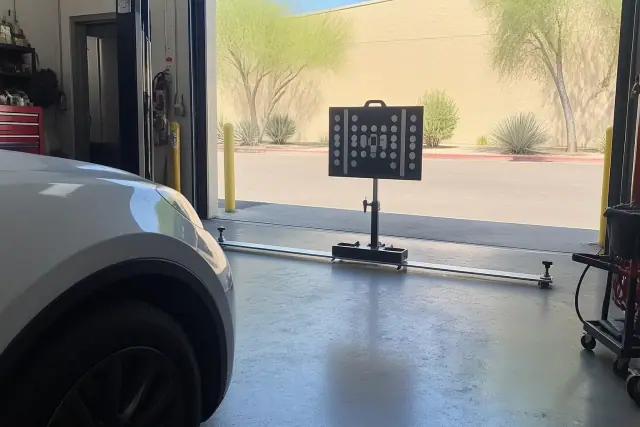
Manufacturer-specified targets must be centered at exact distances from a vehicle on a measured shop floor. This setup explains why static calibration is typically completed in-shop rather than roadside.
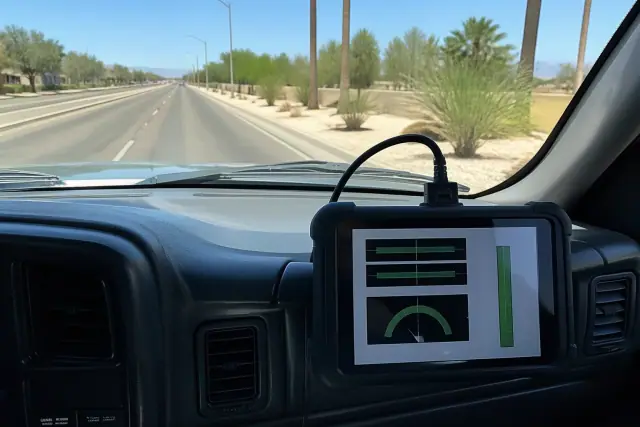
Dynamic calibration requires the vehicle to travel at the specified speed on a road with clear lane markings while a scan tool monitors progress. Driving alone does not confirm successful calibration.
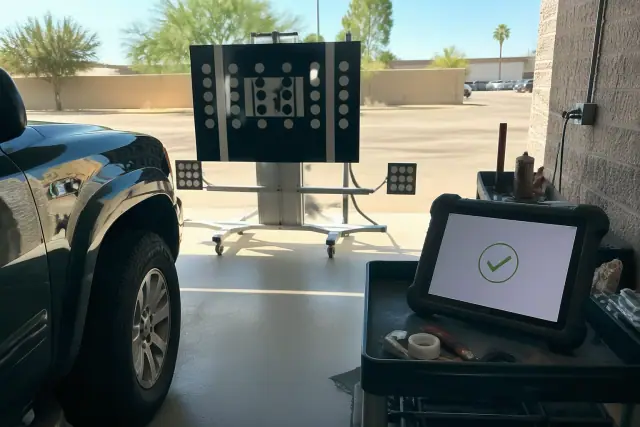
A completed scan should confirm accepted alignment and no unresolved diagnostic trouble codes. This final check matters before the vehicle is returned to the driver.
Confirm the VIN and trim level to identify a camera near the rearview mirror or radar paired with it. Vehicles without windshield-mounted ADAS equipment generally do not need recalibration.
The vehicle's manufacturer procedure determines the method. Dual-camera and combined camera-and-radar systems often sit at the more involved end of the process.
Static calibration usually takes 30 to 90 minutes, and dynamic calibration adds about 15 to 30 minutes. With glass installation and manufacturer-specified urethane cure time, most combined jobs take 2 to 3 hours total.
Diagnostic trouble codes usually flag a hard fault, not every subtle camera-angle error. A misaligned camera may still operate while judging following distance or lane position incorrectly.
| Vehicle situation | Calibration need | Best next action |
|---|---|---|
| No windshield-mounted ADAS camera | Recalibration is generally not required. | Verify the VIN and trim before replacement. |
| Windshield-mounted camera disturbed by replacement | Recalibration is required. | Complete the manufacturer-specified static or dynamic method. |
| Dual-camera or camera-and-radar system | The vehicle may require both methods. | Finish both procedures, then scan and road-test. |
| No dashboard warning after replacement | This does not prove alignment is correct. | Confirm acceptance with calibration equipment and a diagnostic scan. |
The camera behind the windshield supplies road data to lane departure warning, forward collision warning, automatic emergency braking, adaptive cruise control, automatic high beams, and traffic sign recognition when equipped. Its position is engineered in millimeters and degrees, and replacement glass can differ slightly in curvature and optical properties. Recalibration restores the specified viewing angle so a small shift does not distort distance calculations by several feet at highway speed.
Dynamic calibration needs clear lane markings and a steady required speed, which can be harder to maintain when traffic compresses on I-10 and I-17. Sun-faded paint on broad roads such as Camelback Road and Bell Road leaves less margin for an already misaligned camera. Phoenix summer heat can speed urethane curing, but the windshield still needs the manufacturer-specified minimum cure time before a dynamic road test. Mobile replacement is available across the Phoenix metro, while vehicles requiring target boards are typically calibrated in-shop.
Not every replacement needs recalibration: older vehicles without windshield-mounted ADAS equipment, generally those built before the mid-2010s, do not. Most Arizona comprehensive glass policies cover required calibration as part of the claim, and coverage can be checked before work begins. Static calibration is not a practical DIY task because it requires specified targets, precise floor measurements, and manufacturer software; a dynamic drive also needs scan-tool confirmation. Side and rear glass replacement usually do not affect the forward-facing camera, although a vehicle with sensors near other glass should be inspected. If calibration fails, lighting, target placement, or a separate sensor issue may be responsible, and the system should be rescanned and recalibrated before release.
Share your vehicle's year, make, model, and trim so the required calibration method can be checked before windshield replacement. You can also request a free quote and have comprehensive glass coverage verified before work begins.