Damage Size and Depth
Small, shallow damage confined to the outer glass is the strongest repair candidate. Longer cracks up to 6 inches need closer evaluation before resin repair is recommended.
Phoenix Windshield Replacement Co. usually recommends repair when a chip is smaller than a quarter (about 1 inch) or a crack is shorter than 3 inches, shallow, outside the driver's direct line of sight, and away from the glass edge. Those checks matter in Phoenix because heat and UV exposure can turn minor windshield damage into a spreading crack.
Small, shallow damage confined to the outer glass is the strongest repair candidate. Longer cracks up to 6 inches need closer evaluation before resin repair is recommended.
Edge cracks weaken the windshield's bond to the frame, and resin may leave faint distortion in the driver's view. Laminated windshields may qualify for repair, but tempered side and rear windows do not.
Backlighting and depth gauges show whether a crack stopped at the surface or migrated into the laminate. A professional inspection takes about 10 minutes and avoids relying on surface appearance alone.
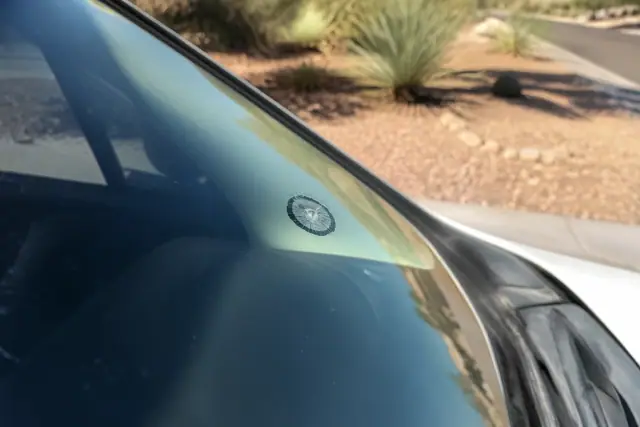
A close view should show a bull's-eye or star break confined to the outer glass. That makes the chip's diameter and penetration depth easy to compare.
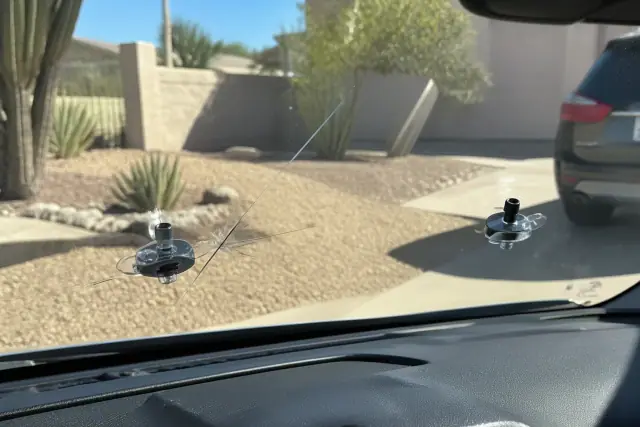
Compare an edge-reaching crack with similar damage low on the passenger side. The same-sized crack can receive a different recommendation because location affects mounting strength and visibility.
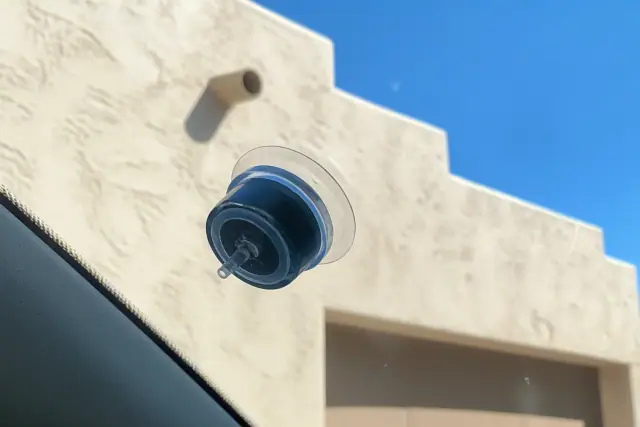
Backlighting and a depth gauge checking the outer glass, plastic interlayer, and inner glass. This reveals damage a do-it-yourself repair kit cannot measure reliably.
A quarter that covers the chip or a standard dollar bill that covers the crack is a useful first screen. Depth, edge distance, and sightline still decide whether repair is appropriate.
Replacement becomes the safer option when damage passes the halfway depth point, reaches the inner layer, separates the interlayer, branches repeatedly, or compromises the edge or driver's view.
Phoenix temperatures climb well over 110 degrees in summer, while heat and UV exposure accelerate stress cracking. Damage that looks minor in the morning can spread by afternoon.
Side and rear windows usually use tempered glass, which shatters rather than holding a repairable chip or crack. Damaged tempered glass must be replaced instead of resin-repaired.
| Damage | Other Conditions | Typical Decision |
|---|---|---|
| Chip under 1 inch | Outer layer only; clear of the edge and sightline | Repair candidate |
| Crack under 3 inches | Shallow and unbranched | Usually repairable |
| Crack 3-6 inches | Depth and location still qualify | Inspect case by case |
| Crack over 6 inches | Or within 2 inches of the edge | Replace |
| Any chip or crack | More than halfway deep, both layers, or direct sightline | Replace |
| Tempered side or rear glass | Any crack or chip | Replace |
A windshield has two glass layers bonded to a plastic interlayer. Epoxy resin can restore damage confined to the outer layer, but it cannot rebuild a broken inner layer or a separated laminate; that is why size, depth, location, crack count, and glass type are the five deciding factors.
A resin repair typically takes 20-30 minutes and costs $50 to $150. Phoenix windshield replacement generally costs $250 to $600 with aftermarket glass and can exceed $1,000 for OEM glass on vehicles with ADAS cameras, sensors, or a heads-up display; those camera-equipped vehicles also need calibration after replacement, and glazing should meet Arizona Motor Vehicle Division and Federal Motor Vehicle Safety Standard 205 requirements.
Can a 3-inch crack be repaired? Often yes, if it is shallow, unbranched, away from the edge, and outside the driver's sightline. Can a windshield be repaired without replacement? Yes, when resin can restore damage confined to the outer layer. What if there are three or more cracks? Their combined weakening usually makes replacement the safer recommendation. Does insurance help? Many comprehensive policies cover repair and may waive the deductible, while replacement coverage depends on the policy and any full-glass endorsement.
Share the damage size and location, along with any ADAS cameras or sensors in the vehicle. A free windshield inspection can confirm the depth, glass layer, and safest next action before you approve repair or replacement.