Proudly serving Phoenix, Glendale, Mesa, Scottsdale, Tempe, Chandler & surrounding areasCall or Text 24/7: 480-264-8023
Guides

What is the Step-by-Step Process for Mobile Windshield Replacement?

Phoenix Windshield Replacement Co. brings the complete windshield replacement process to driveways, workplaces, and job sites across the greater Phoenix area. A technician can assess the damage, install the correct glass, and address required calibration on-site, but the vehicle must remain parked until the urethane reaches its specified safe drive-away time.

Quick Summary

  • Mobile windshield replacement typically takes 45-90 minutes on-site, followed by adhesive cure time before the vehicle is safe to drive.
  • The technician confirms the vehicle and damage, brings the correct glass, removes the old windshield and urethane, prepares the frame, and bonds the new glass in place.
  • Windshield condition, glass features, insurance coverage, and required ADAS calibration can change the scope and price.
  • Vehicles with lane-keep, forward-collision, or adaptive-cruise features require camera calibration after the windshield is replaced.

How Mobile Replacement Works

Check the Vehicle and Glass

Before arrival, the technician confirms the year, make, model, damage, and windshield features so the correct OEM or quality aftermarket glass is ready. On-site, the damage and pinch weld are checked for repair suitability, rust, or corrosion.

Remove and Set the Windshield

The technician removes the trim, cuts the old urethane bead, lifts out the damaged glass, and cleans the frame. Fresh urethane is applied, and calibrated suction tools help position the replacement windshield before moldings and sensors are reinstalled.

Cure and Calibrate Before Driving

The vehicle stays parked until the urethane reaches the adhesive manufacturer's safe drive-away time, even when Phoenix heat speeds curing. If the windshield supports a forward-facing camera, the required static, dynamic, or combined ADAS calibration is completed before release.

What the Technician Checks

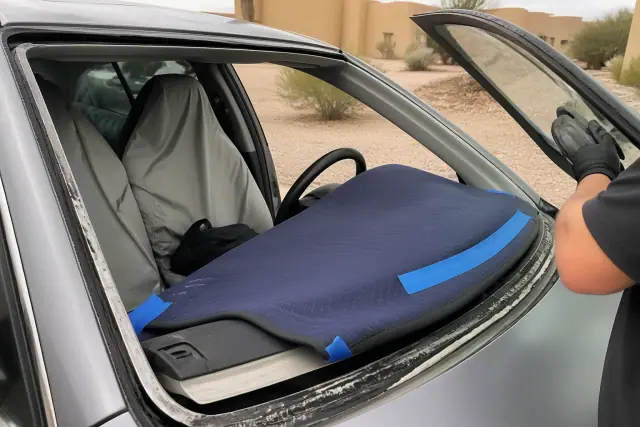
Pinch-Weld Inspection Before Installation

Technician inspecting a vehicle pinch-weld during a windshield replacement in Phoenix, AZ.

The exposed windshield frame is checked for rust, corrosion, and a clean bonding surface before new adhesive is applied. Proper preparation helps prevent leaks, wind noise, and weak retention.

New Urethane Bead and Windshield Setting

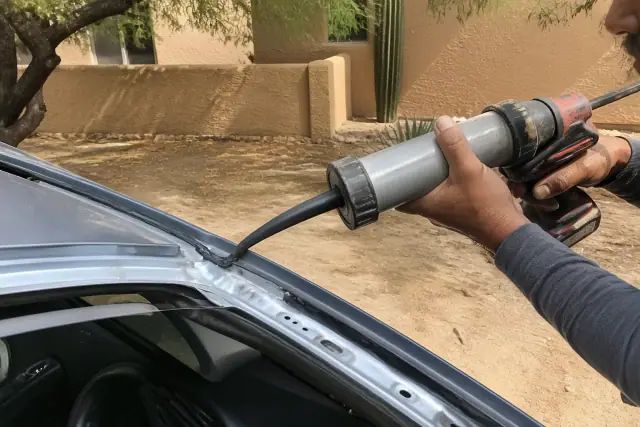
Black urethane adhesive being applied to a vehicle windshield frame at a jobsite in Phoenix, AZ.

An even urethane bead creates the bonding path around the prepared frame, while suction tools support controlled glass placement. Careful handling keeps the adhesive clean and the windshield aligned.

ADAS Camera Calibration After Replacement

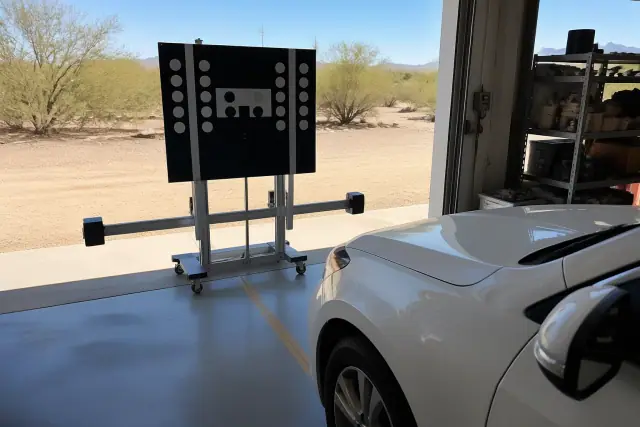
ADAS camera calibration target stand set up in front of a vehicle at a Phoenix, AZ service bay.

A forward-facing camera may be calibrated with target equipment, a controlled road test, or both after replacement. Calibration restores the camera's reference point after the glass position changes.

Mobile Replacement Snapshot

Repair or Replace?

Chip repair can often be completed in 20-30 minutes when damage is smaller than a quarter, outside the driver's direct line of sight, and has not spread. A crack more than a few inches long or reaching the glass edge generally calls for replacement.

What Affects Price

Standard non-ADAS replacement generally runs $210-$500. Vehicles with cameras, rain sensors, heads-up displays, or calibration needs can reach $700-$1,500 because glass features and calibration add equipment and labor.

When the Vehicle Can Move

Installation is not the final timing milestone. The technician must confirm the adhesive-specific safe drive-away time, which varies with the urethane product and ambient temperature, before the vehicle is driven.

Do Not Skip Calibration

Even a fraction of a degree of camera misalignment can change how ADAS reads lanes and distance. The two calibration types are static target-board calibration and dynamic calibration at specified road speeds, and many newer vehicles require both.

Mobile Replacement Timeline

PhaseWhat the Technician DoesWhat You Confirm
Before arrivalReviews the vehicle year, make, model, and damage, then sources the correct OEM or quality aftermarket glass.Vehicle access, parking location, and insurance details.
Removal and preparationInspects the pinch weld, removes trim and damaged glass, cuts away old urethane, and cleans the bonding surface.Repair versus replacement and any rust or corrosion findings.
Installation and releaseApplies fresh urethane, sets the glass, reinstalls moldings and sensors, and calibrates ADAS when required.Manufacturer-specified safe drive-away time and calibration completion.

How the On-Site Process Works

Mobile service follows the same core safety sequence as shop installation: assess the vehicle, remove the damaged glass and old urethane, prepare the pinch weld, apply fresh adhesive, set the new windshield, and reinstall necessary moldings and sensors. The installation should follow ANSI/AGRSS guidance and FMVSS 205, 212, and 216 requirements for glazing and windshield retention. The technician then confirms cure time and completes required calibration before the vehicle returns to service.

Cost, Insurance, and Calibration

Glass construction, vehicle-specific sensors, acoustic features, and calibration requirements affect the final quote. Many comprehensive policies offer zero-deductible glass repair, while replacement may use a comprehensive deductible commonly ranging from $250-$500; coverage depends on the individual policy. Direct billing can send the covered portion to the insurer, but the deductible and policy terms should be reviewed before scheduling.

Common Follow-Up Questions

You do not have to stand beside the vehicle throughout the appointment, but you should remain reachable for access, parking, damage, or insurance questions. A vehicle with a forward-facing camera may need static calibration in a controlled space, dynamic calibration during a road test, or both. Larger trucks and SUVs can take longer to install, and every vehicle must remain parked through the adhesive's specified cure period.
Mobile Service Help

Ready to Schedule Mobile Replacement?

Share your vehicle details and a description of the damage to confirm repair versus replacement, glass availability, calibration needs, and price before dispatch. Same-day appointments may be available when location and scheduling allow, and weekend appointments are available for drivers who cannot schedule during the week.