Leave the Retention Tape in Place
Keep the tape on for the full 24-48 hour cure window. It holds the glass and molding steady while the urethane gains structural strength.
Phoenix Windshield Replacement Co. explains the aftercare mistakes that can stress fresh urethane before it fully cures on Phoenix roads. Leaving the retention tape in place, delaying car washes, closing doors gently, and choosing smooth routes help prevent an early leak, shifted glass, or wind noise.
Keep the tape on for the full 24-48 hour cure window. It holds the glass and molding steady while the urethane gains structural strength.
Wait a full 48 hours before any car wash. High-pressure water can lift an uncured edge, while abrasive or acidic cleaners can damage the glass edge and nearby paint.
Crack a window before gently closing a door, and avoid unpaved stretches, speed bumps, and potholes for the first day. Wind buffeting, sharp impacts, and cabin-pressure spikes can all load a bond that has not fully cured.
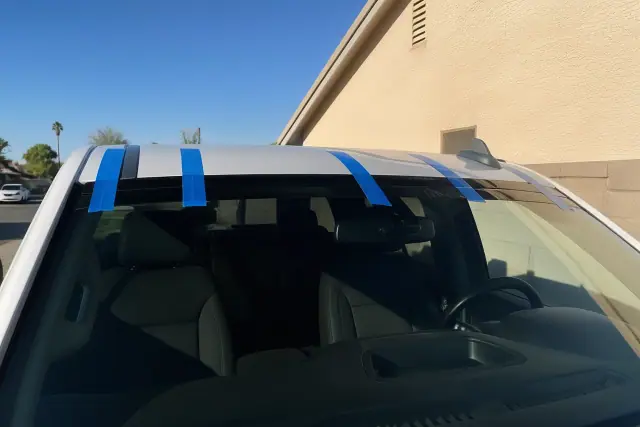
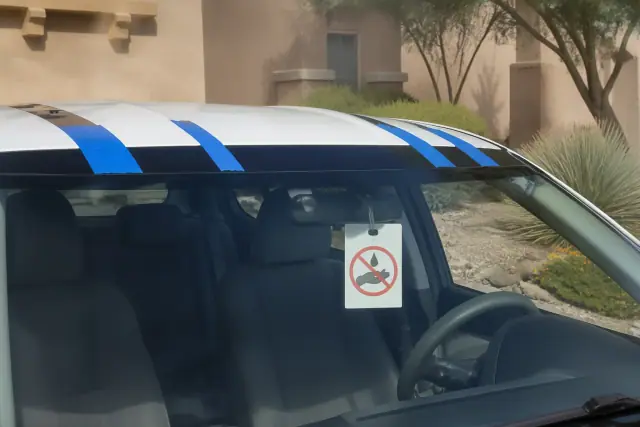
Intact tape securing the glass and molding without a sunshade pressing against the edge. The tape should remain undisturbed during the initial cure window.
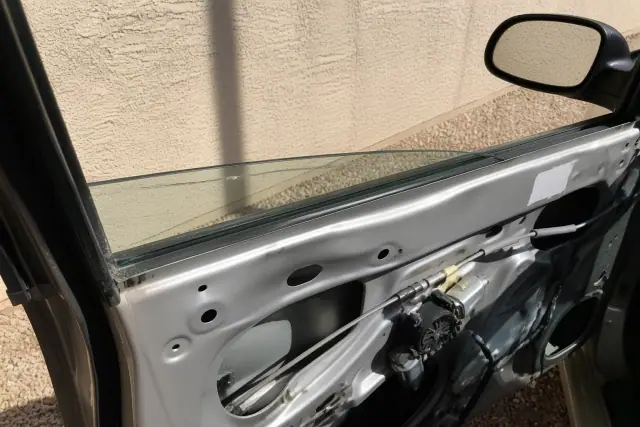
A side window open about 1 inch while the door is closed gently. This small opening helps equalize cabin pressure instead of pushing against fresh urethane.
A soft cloth, mild soap, and water kept at low pressure around the molding. Gentle hand washing is the safer choice after the 48-hour wait.
Most urethanes reach a safe drive-away time within 30 minutes to an hour, but follow the exact time given for the adhesive used. For the first few hours, stay below 45 mph when possible and avoid rough roads or highway wind load.
Keep the tape in place, crack a window 1 inch before closing a door, and choose smooth paved routes. Avoid pothole-heavy stretches on Van Buren or Grand Avenue and construction zones along Loop 101 or the I-10 corridor.
A minimum of 24 hours is recommended for retention tape, and 48 hours is safer in Phoenix's dry heat and dust. Continue avoiding car washes, rough driving, and anything mounted to the windshield until the adhesive has fully cured.
Keep pressure washers away from the seal and skip ammonia-heavy, acidic, or abrasive cleaners near the trim. Never scrape near the edge seal with a razor blade; use warm water, mild soap, and a soft cloth instead.
| After Replacement | Protect the Fresh Bond | Avoid |
|---|---|---|
| First 30 minutes to 1 hour | Follow the urethane-specific safe drive-away time. | Leaving before the installer clears the vehicle. |
| First few hours | Use smooth roads and stay below 45 mph when possible. | Highway wind load, potholes, and rough roads. |
| First 24 hours | Keep the tape on, crack a window 1 inch, and close doors gently. | Door slams and pressure spikes inside the cabin. |
| 24 to 48 hours | Let the urethane reach full structural cure. | Car washes and glass-mounted devices. |
| After 48 hours | Inspect the trim, then wash gently with mild soap. | Direct high-pressure spray at the edge seal. |
| First week | Use a soft cloth near the glass and molding. | Abrasives, ammonia-heavy cleaner, acids, and razor blades near the seal. |
Safe drive-away time is not the same as full structural cure. Urethane generally needs 24 to 48 hours to reach full strength depending on temperature and humidity, and door slams, wind buffeting, potholes, high-pressure water, or glass-mounted devices can stress the fresh bead. Phoenix asphalt temperatures above 140 degrees and cabin temperatures past 150 degrees may accelerate skin-over, but they do not eliminate the full cure window.
The handoff instructions should reflect the specific urethane's safe drive-away time, humidity, temperature, and the vehicle's equipment. A proper installation removes the old glass and urethane bead, prepares the pinch weld, applies primer and new urethane, sets the glass with correct spacing, and follows ANSI/AGRSS 002 guidance for adhesive selection and safe drive-away time. Forward-facing cameras used for lane departure warning, automatic emergency braking, or adaptive cruise control require ADAS calibration; published guidance indicates this is common on most 2018-and-newer vehicles and that even a millimeter of misalignment changes the camera's view. A standard windshield typically runs $250 to $600 without insurance, while rain sensors, heated elements, heads-up displays, or ADAS cameras can move the total to $500 to $1,500+ because of parts and calibration.
How soon can you wash the car? Wait at least 48 hours, then use mild soap, a soft cloth, and low water pressure. Can rain hurt the new seal? Light rain is usually not a problem after curing begins, but avoid standing water or high-pressure runoff at the edge, and do not install the glass during active rain because moisture interferes with primer and urethane adhesion. When can the tape come off or devices go back on? Leave the tape for at least 24 hours-48 is safer in Phoenix-and wait for full cure before attaching dash cams, toll tags, stickers, or other devices.
If tape lifts or a gap, leak, or wind noise appears after the cure window, share when it started and whether the vehicle encountered a wash, rough road, or door slam. Mobile auto glass appointments are available at homes in Ahwatukee, Arcadia, or Desert Ridge and workplaces near Sky Harbor, with service across the Salt River Valley.